#Blacklivesmatter #Harlem Baby Cobina by Gladys May Casely Hayford


laluah

Baby Cobina

Brown Baby Cobina, with his large black velvet eyes,
His little coos of ecstacies, his gurgling of surprise,
With brass bells on his ankles, that laugh where’er he goes,
It’s so rare for bells to tinkle, above brown dimpled toes.

Brown Baby Cobina is so precious that we fear
Something might come and steal him, when we grown-ups are not near;
So we tied bells on his ankles, and kissed on them this charm —
” Bells, guard our Baby Cobina from all devils and all harm. ”

Gladys May Casely Hayford (Aquah LaLuah)

From: “Caroling Dusk: an Anthology of Verse by Black Poets.” Edited by Countee Cullen.

NEW and USED: Abebooks.com Caroling Dusk
NEW at independent bookstores NEAR you: Caroling Dusk

Other reading:

Wall, Cheryl. Women of the Harlem Renaissance. Bloomington: Indiana University Press, 1995.

#BlackHistoryMonth I asked a young Blood poet if my stuff was correct by Hoagland

Puttin’ on the Dog

for “Corner Girl”
By Everett Hoagland

Is my shit correct?
Is my vine correct?
Are my kicks country or correct?
Is my “do” down?Is my shit correct?Is my rusty black diction correct?
Should my ever more erudite
utterances be in “The Vernacular?”
Should my presentation be
theatrical and spectacular?

Is my shit correct?

Should my manner be mannered
and laid back?
Is my poetry Posey?
Does it go to too far into haute couture
noire?
Does it come from hard facts
and Fanon,
or does it refer repeatedly
to The Canon trippin’
in Trickster Mode, tryin’
to Trope-A-Dope????

Is my shit correct?

But, hey, black poetry’s got more
than one good way.
The other day I asked a young Blood
poet if my stuff was correct, if it was
happenin’.
He said, Breaklight becomes dawn,
Ol’ Head.  The word “happenin”
ain’t happenin’, ain’t “where it’s at.”
Today it’s on. Word!
Our work is all that.

#OscarsSoWhite #Pulitzer Looking for Colour by Elizabeth Alexander

timthumb.php.pngPhotographer unknown.

11373118-essayAP Photo/Julie Jacobson, Gymnast Gabrielle Douglas (gold medal).

Today’s news
by Elizabeth Alexander

Composer of Barack Hussein Obama’s inauguration poem!
Professor of Poetry at Yale. Feminist!
Shortlisted for the Pulitzer Prize!

Heavyweight champion of the world Mike Tyson
broke his fist in the street brawl in Harlem
At three AM outside an all-night clothing store
where he was buying 800-dollar, white
leather coat. The other dude, on TV, said,
“It was a sucker punch.” Muhammad Ali said
Tyson ain’t pretty enough to be a heavyweight
champion of the world. Years ago a new Ali
threw his Olympic gold into the Ohio
River, said he’d get it when black people were truly
free in this country. In South Africa there is a dance
that says       we are fed up       we have no work    you have
struck a rock. I saw it on today’s news.

I didn’t want to write a poem that said “blackness
is,” because we know better than anyone
that we are not one or ten or ten thousand things
Not one poem      We could count ourselves forever
and never agree on the number. When the first
black Olympic gymnast was black and on TV I called
home to say it was colored on channel three
in nineteen eighty-eight. Most mornings these days
Ralph Edwards comes into the bedroom and says, “Elizabeth,
this is your life. Get up and look for color,
look for color everywhere.”

.

More to read at http://www.poetryfoundation.org/bio/elizabeth-alexander

From: The Oxford Anthology of African-American Poetry.

NEW and USED: Abebooks.com The Oxford Anthology of African-American Poetry
NEW at independent bookstores: http://www.indiebound.org/book/9780195125634

2012 Summer Olympics, Tuesday, July 31, 2012, in London. (AP Photo/Matt Dunham)


#BlackHistoryMonth #poem i am running into a new year by Lucille Clifton

i am running into a new year by Lucille Clifton

i am running into a new year
and the old years blow back
like a wind
that i catch in my hair
like strong fingers like
all my old promises and
it will be hard to let go
of what i said to myself
about myself
when i was sixteen and
twentysix and thirtysix
even thirtysix but
i am running into a new year
and i beg what i love and
i leave to forgive me

—Lucille Clifton, Good Woman: Poems and A Memoir 1969-1980

From: The Oxford Anthology of African-American Poetry.
NEW and USED: Abebooks.com The Oxford Anthology of African-American Poetry
NEW at independent bookstores: http://www.indiebound.org/book/9780195125634

#BlackHistoryMonth #poem Tired by Fenton Johnson

Don’t read this when you’re tired or sad or have given up hope. This is a poem by a writer who is tired of the world we are still building together: a racist society. Ta-Nehissi Coates (he/him) and El Jones (she/her) aren’t  the only ones who feel hopeless.

Tired
I am tired of work; I am tired of building up somebody else’s civilization.
Let us take a rest, M’lissy Jane.

I will go down to the Last Chance Saloon, drink a gallon or two of gin, shoot a
game or two of dice and sleep the rest of the night on one of Mike’s barrells.

You will let the old shanty go to rot, the white people’s clothes turn to dust, and
the Cavalry Baptist Church sink to the bottomless pit.

You will spend your days forgetting you married me and your nights hunting the
warm gin Mike serves the ladies in the rear of the Last Chance Saloon.

Throw the children in the river; civilization has given us too many. It is better to die
than it is to grow up and find out that you are colored.

Pluck the stars out of the heavens. The stars mark our destiny. The stars mark my destiny.

I am tired of civilization.

.

.

From: The Oxford Anthology of African-American Poetry.
NEW and USED: Abebooks.com The Oxford Anthology of African-American Poetry
NEW at independent bookstores: http://www.indiebound.org/book/9780195125634

#BlackHistoryMonth Old Black Ladies Standing on Bus Stop Corners #poem

7db2148cc553f6b4793de5f6fc583e7cLadies On The Town, Bus Stop In Chinatown, Washington, DC
Photo by Gerald L. Campbell

Old Black Ladies Standing on Bus Stop Corners #2

for my grandmother, Leona Smith

blue black & bow bent under, beautiful

& it never did matter
whether the weather
was flame-tongue-licked
or as cold as a welldigger’s asshole
in late december when santa claus
was working his cold money bullshit
that made financiers grin ear to ear
all the way to secret bank vaults
overflowing with marble eyes
of dirt-poor children

blue black & bow bent under, beautiful

never did matter
whether the days were storm raked
unzipped by lightning streaking clouds
dropping tornadoes that skipped crazy
to their own exploding beat
shooting hailstone death–
that popped like old bones–
crashing into the skulled
sunken eyes of tired old ladies
tired old black ladies
standing on bus stop corners
pain wrapped as shawls around their necks

blue black & bow bent under, beautiful

& “mama” it didn’t matter
that your pained scarred feet overworked
numb legs grew down out of old worn dresses
seemingly fragile, gaunt & skeletal frail
as two old mop sticks–scarecrow legs–
and didn’t matter because you stood there anyway
defying nature’s chameleon weather–
cold as a welldigger’s asshole, then oven-hot–
defying all reason, you stood
there, testifying over 300 years
stretching back, of madness & treason

blue black & bow bent under, beautiful

no, it didn’t matter
because the beauty of your heroic life
grown lovely in twisted swamps
grown lovely in a loveless land
grown pure & full from wombs
of concrete blood & bones
of concrete blood & bones & death
of death & sweat chained to breath
didn’t matter dark proud flower
who stood tall scrubbed by cold
& rain & heat & age carrying
the foreign name given your grandfather–
who swayed body high
twisting & turning in the breeze
like billie’s “strange fruit”–

because you stood there anyway
unforgettably silent in your standing
beautiful work-scarred black lady
numb legs & bow bent under beautiful
stood there on pain-scarred feet overworked
numb legs
& bow bent under beautiful
under the memory of your grandfather swaying high
up there in a burning southern breeze
now sweet music love sings soft tender beauty
deep in your washed aging windows–
& you give me strength
during the mad, bizarre days–

& we have learned to love your life
& will vindicate the pain & silence of your life
the memory of your grandfather with the foreign name
& who sways high up there in history over your legs
blue black & bow bent under beautiful
the weight of over 300 years carried
of blood & bones & death in mud
of breath & sweat chained to death
numb legs & bow bent under beautiful
under the memory of your grandfather
swaying high up there in the burning breeze

didn’t matter whether the weather was flame-tongue-licked
or cold as a welldigger’s asshole in late december
because you stood there anyway
in full bloom of your strength & rare beauty
& made us strong

blue black & bow bent under, beautiful

Quincy Troupe, in The Oxford Anthology of African-American Poetry, ed. Arnold Rampersad (Oxford 2006)

.

.

From: The Oxford Anthology of African-American Poetry.
NEW and USED: Abebooks.com The Oxford Anthology of African-American Poetry
NEW at independent bookstores: http://www.indiebound.org/book/9780195125634

#BlackHistoryMonth #poem Old People Speak of Death #blacklivesmatter

Quincy Troupe the poet is an amazing black poet, prof and writer for children!

Quincy Troupe feels like home, because he is Emeritus Professor American and Caribbean Literature at the University of California. Anyone who loves Caribbean literature has a special place in my heart.

He is #BlackExcellence: Quincy Troupe publishes Black Renaissance Noire, an academic, cultural, political and literary newspaper co-published by the University of New York through the African studies and the Institute of Afroamerican Issues program/department.

And, and, and… He was co-author along with Miles Davis of Miles: The Autobiography, 1989.

What a fine man!

The Old People Speak of Death,
For Grandmother, Leona Smith
by Quincy Troupe

the old people speak of death
frequently, now
my grandmother speaks of those now
gone to spirit, now
less than bone

they speak of shadows that graced
their days, made lovelier by their wings of light
speak of years & of the corpses of years, of darkness
& of relationships buried
deeper even than residue of bone
gone now, beyond hardness
gone now, beyond form

they smile now from ingrown roots
of beginnings, those who have left us
& climbed back through holes the old folks left
inside their turnstile eyes
for them to pass through

eye walk back now, with this poem
through turnstile-holes the old folks – ancestors – left inside
their tunneling eyes for me to pass through, walk back to where
eye see them there
the ones who have gone beyond hardness
the ones who have gone beyond form
see them there
darker than where roots began
& lighter than where they go
carrying spirits heavier than stone –
their memories sometimes brighter
than the flash of sudden lightning –

& green branches & flowers will grow
from these roots – wearing faces –
darker than time & blacker than even the ashes of nations
sweet music will sprout from these flowers & wave petals
like hands caressing love-stroked language
under sun-tongued mornings –
shadow the light spirit in all our eyes –

they have gone now, back to shadow
as eye climb back out of the holes of these old peoples
eyes, those spirits who sing now through this poem
who have gone now back with their spirits
to fuse with greenness
enter stones & glue their invisible traces
as faces nailed upon the transmigration of earth
their exhausted breath now singing guitar blues
voices blowing winds through white ribcages
of these boned days
gone now back to where
years run, darker than where
roots begin, greener than what
they bring – spring
the old people speak of death
frequently, now
my grandmother speaks of those now
gone to spirit, now
less than bone


Quincy Troupe was born in New York , United States , in 1943. Poet, narrator, essayist, college professor. He has published, among other works, the poetry books: Embryo, 1971; Skulls along the River, 1984; Weather Reports: New and Selected Poems, 1991; Avalanche, 1997; Trascircularities; New and Selected Poems, 2002; and more recently, The Architechture of Language. He is Emeritus Professor of creative writing and American and Caribbean Literature at the University of California .

His poetry and prose have been translated into French, Spanish, German, Italian, Russian, Polish and Dutch. He has read his work throughout all the United States as well as in Europe, Africa, Canada , The Caribbean, Mexico and Brazil .

He has published the following books for children: Take it to the hoop, Magic Johnson, based on his popular “Poem for Magic” 2000; Little Stevie 2005 and Hallalujah about old Ray Charles, 2006.”

.

.

From: The Oxford Anthology of African-American Poetry.
NEW and USED: Abebooks.com The Oxford Anthology of African-American Poetry
NEW at independent bookstores: http://www.indiebound.org/book/9780195125634

#BlackHistoryMonth Walking Down Park by Nikki Giovanni #iNeedFeminismBecause

Screen Shot 2015-12-10 at 10.52.07 PM

Walking Down Park

BY NIKKI GIOVANNI

walking down park
amsterdam
or columbus do you ever stop
to think what it looked like
before it was an avenue
did you ever stop to think
what you walked
before you rode
subways to the stock
exchange (we can’t be on
the stock exchange
we are the stock
exchanged)
.
did you ever maybe wonder
what grass was like before
they rolled it
into a ball and called
it central park
where syphilitic dogs
and their two-legged tubercular
masters fertilize
the corners and side-walks
ever want to know what would happen
if your life could be fertilized
by a love thought
from a loved one
who loves you
 .
ever look south
on a clear day and not see
time’s squares but see
tall Birch trees with sycamores
touching hands
and see gazelles running playfully
after the lions
ever hear the antelope bark
from the third floor apartment
 .
ever, did you ever, sit down
and wonder about what freedom’s freedom
would bring
it’s so easy to be free
you start by loving yourself
then those who look like you
all else will come
naturally
 .
ever wonder why
so much asphalt was laid
in so little space
probably so we would forget
the Iroquois, Algonquin
and Mohicans who could caress
the earth
 .
ever think what Harlem would be
like if our herbs and roots and elephant ears
grew sending
a cacophony of sound to us
the parrot parroting black is beautiful black is beautiful
owls sending out whooooo’s making love …
and me and you just sitting in the sun trying
to find a way to get a banana tree from one of the monkeys
koala bears in the trees laughing at our listlessness
 .
ever think its possible
for us to be
happy
 .
.

Nikki Giovanni, “Walking Down Park” from The Selected Poems of Nikki Giovanni. Copyright © 1996 by Nikki Giovanni. Used with the permission of HarperCollins Publishers.

Source: The Collected Poems of Nikki Giovanni (2003)

.

.

From: The Oxford Anthology of African-American Poetry.
NEW and USED: Abebooks.com The Oxford Anthology of African-American Poetry
NEW at independent bookstores: http://www.indiebound.org/book/9780195125634

The Gods Wrote #blacklivesmatter South Africa

THE GODS WROTE
We are breath of drop of rain
Grain of sea sand in the wind
We are root of baobab
Flesh of this soil
Blood of Congo brush elegant
As breast of dark cloud
Or milk flowing through the groaning yearsWe also know
Centuries with the taste
Of white shit down to the spine…The choice is ours
So is the life
The music of our laughter reborn
Tyityimba or boogaloo passion
Of the sun-eyed gods of our blood
Laughs in the nighttime, in the daytime too
And across America vicious cities
Clatter to the ground. Was it notAll written by the gods!
Turn the things! I said
Let them things roll
To the rhythm of our movement
Don’t you know this is a love supreme!
John Coltrane  John Coltrane tell the ancestors
We listened we heard your message
Tell them you gave us tracks to move

Trane and now we know
The choice is ours
So is the mind and the matches too
The choice is ours

So is the beginning
‘We were not made eternally to weep’
The choice is ours
So is the need and the want too
The choice is ours
So is the vision of the day


Black Poet, White Poet #BlackLivesMatter LaWanda Walters

#iNeedFeminismBecause # intersectionality #maleprivilege
Screen Shot 2015-12-10 at 10.46.34 PM

A white woman poet using a black poet’s invention… No actual reflection done by the poet, so the problem with *using* is still there. But that can be changed! Both poems are beautiful in different ways.

This is the striking original:

The Pool Players.
Seven at the Golden Shovel.
            We real cool. We
            Left school. We

.

            Lurk late. We
            Strike straight. We

.

            Sing sin. We
            Thin gin. We

.

            Jazz June. We
            Die soon.
 .
.

White poet: “What right did I have, though, to use a form invented by an African American poet to write my “Goodness in Mississippi,” a poem about anorexia nervosa, which has been called “a white girl’s disease”? What right did I have to use the “we real cool” to “we die soon” template to speak of my friend Barbie’s death, years after I knew her, of complications from the disease? But something about the form—perhaps how it acknowledges its debts—gave me the courage to write about a particular “we,” two friends from “school,” one of whom did “die soon.” It allowed me to finish a poem I’d worked on for twenty years.”

Goodness in Mississippi

After Gwendolyn Brooks’s “We Real Cool,”
with thanks to Terrance Hayes

My friend said I wasn’t fat but she was, and we
would go on that way, back and forth. She was my first real

friend, the kind who changes everything. Her mother was so cool,
didn’t shave down there for the country club pool where we

sat beside her. I saw a gleam of her secret, silver hair and was left
dreaming of lime floating in a clear drink. I started saying hi at school

and people smiled back. Smile first, my friend said, and we
were a team. The cheerleaders who would always lurk

by the field, showing off their muscled legs—of late
I’d hardly noticed them. We talked about art, we

attended science camp in Gulfport. That’s where her mother got struck
by a car the next year. She must have thrown the new baby straight

as a football to save her. Their family was on vacation, and we
found out at Sunday School, waiting for the choir to sing.

She was so good she comforted me. People saying, “It’s just a sin,”
her mom like Snow White under glass, red lipstick, platinum hair we

knew was genetic. You’ll still look young, I said. I think you’re thin.
We’d skip lunch, drink Sego (“good for your ego”). Last year I drank gin

and called her ex. “She passed,” he drawled, like it was the weather. We
tried powdered donuts with the Sego, sweated to the Beatles and jazz.

Her whole life was beginning. We moved away from there one June,
Mississippi tight-mouthed as a lid on fig preserves. And we—

we white girls—knew nothing. The fire-bombed store, the owner who died
for paying his friends’ poll taxes. Anorexia would be famous soon.

(The Georgia Review, Winter 2013)

  1. Walters states the poem she uses. That is acknowledgment of using.
  2. Walters writes in Mississippi Haze about the background of her poem, civil rights era, but does not show the poem she used. Poem is erased, hidden. The poem she used is easy to find, but you have to want to be aware of appropriation to look for it. Most people won’t look. “Showing” is the poetess’s responsibility towards a black poet.
  3. Walters does not reflect on her *use*, only states there is a question whether it is right.
  4. You can use someone’s idea, sure, the poem came out great, but if it comes from someone oppressed, erased, someone part of a group kept under white people’s boots/books, she has to give back.
  5. How do you give back?
  6. Make room for black poets in the places you get published.
  7. Ask your publishers to print new black poets, as a personal favour to you, a white person, ask them to publish great poems, because it is not a given when you are a great black poet.

LaWanda Walters has work to do. And a white male poet needs to use his cred to support her in doing that.

It is more tiring to face racism every day, than to work your privilege in fighting racism.

LaWanda Walters discusses the psychology of civil-rights era Mississippi—drawing parallels between the injustices of segregation and a childhood friend’s illness from anorexia nervosa—and her use of a form of poetry called “the golden shovel” in her Winter 2013 poem “Goodness in Mississippi.”

http://garev.uga.edu/wordpress/index.php/2014/04/mississippi-daze/

Gwendolyn Brooks, “We Real Cool” from Selected Poems. Copyright © 1963 by Gwendolyn Brooks. Reprinted with the permission of the Estate of Gwendolyn Brooks.
 

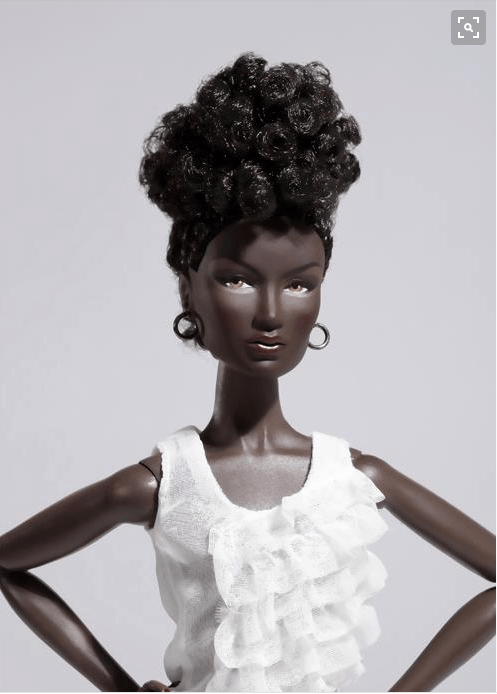
Dear Black Barbie #BlackLivesMatter by Candace G. Wiley

#iNeedFeminismBecause #INTERSECTIONALITY #endpoverty #idlenomore #onelove #lgbt

This poem is a hard one to read and to acknowledge: power of white patriarchy and internalized racism, sexism, homophobia. White people need to make space in their privileged life and work and free time for people of colour. Every day. And if you think that is tiring… it is. Less tiring however than to be indigenous, black or of colour. At the moment being a muslim, especially being a woman with a headscarf is tiring, scary, sad. The least we can do is to stand up for those women and step in, step up and defend them if anyone, including unfortunately cops who were meant to protect us (?), attacks them or harasses them. Record, but don’t just record. Protect and support your neighbours.

And we have to ask for more. One black barbie isn’t enough just because she didn’t used to be there (isn’t true anyway, there have always been black dolls), our kids need more and different ones!

Screen Shot 2015-12-10 at 10.52.07 PM

DEAR BLACK BARBIE

Candace G. Wiley

I made you fuck my white Barbie
even though I knew you didn’t want to.
There were no whips or chains,
this was a different kind of plantation fantasy.
I didn’t have a Ken doll, so I made you the man.
Not knowing what fucking looked like
I just rubbed you against each other and made you kiss.

I kept you barefoot like you came
three worlds later or fifty years earlier,
but I had Nicki Minaj dreams for us:
bleached brown skin, long stringy yellow hair,
God-blue eyes, lips pink as a Cadillac. Only then
could you wear the best dress and the one pair of pumps.

My dear black Barbie, maybe you needed a grandma
to tell you things are better than they used to be.
There was a time when you didn’t exist at all.


http://prairieschooner.unl.edu/excerpt/dear-black-barbie

“Candace G. Wiley is a poet and fiction writer.

She has served as the creative writing director for a reproduction of the musical revue Jacques Brel: Alive and Well and Living in Paris, which was a benefit performance for Haiti, and

she has written dialogues and poetry for the prototype of Ghosts of South Carolina College, an iPhone app.

She recently returned to the United States from San Basilio de Palenque, Colombia, where she conducted research as a Fulbright Fellow for her poetry manuscript.”

https://muse.jhu.edu/login?auth=0&type=summary&url=/journals/prairie_schooner/v088/88.1.wiley.html


 Buy from an Indie bookstore here 

Pamela Sneed Say Her Name Black Lives Matter

I had just begun to relax
celebrate the marriage equality ruling
I had just begun feeling with Obama I was
watching Ali in trouble off the ropes
delivering to his opponents the rope-a-dope
my fathers eyes
excitement
I was just beginning to breathe air
feel exhilirated at images of
Joe Biden and President Obama running
down halls of the White House with rainbow flags
like boys with kites-soaring
I was just beginning to forgive deaths of my brothers
to Aids
not forget
there should stil be tribunals
for them and every woman abused
by the medical system
I had just begun to turn a corner on Mike Brown, Freddie Gray
Trayvon Martin, Eric Garner, The massacre at AME
not think of it all everyday
Then the police kill this young Black girl in custody in Texas
claim she committed suicide
I remember we’re a war nation
in war times
I imagine how James, Bayard, Nina felt
seeing a nation turn its dogs, teeth, gas, hoses, bullets,
on children, adults, humans
I cant stop thinking about Steve Biko
his battered face
they say he hung himself too
the worlds outrage
who will pray now
for us
America

Oh, Lucille Clifton… “Listen Children/we have always loved each other” #BlackLivesMatter #ValentinesDay

One of the most beautiful love poems for black children. So much love she has, and so careful to talk simply and direct. No big words, no flowers, chocolate or stars. Lucille Clifton passed away 5 years ago after many years of fighting cancer.

Listen Children

listen children
keep this in the place
you have for keeping
always
keep it all ways

we have never hated black

listen
we have been ashamed
hopeless tired mad
but always
all ways
we loved us

we have always loved each other
children all ways

pass it on

…………………………………………………

good times

my daddy has paid the rent
and the insurance man is gone
and the lights is back on
and my uncle brud has hit
for one dollar straight
and they is good times
good times
good times

my mama has made bread
and grampaw has come
and everybody is drunk
and dancing in the kitchen
and singing in the kitchen
of these is good times
good times
good times

oh children think about the
good times

………………………………………………….

Poem in praise of menstruation

if there is a river
more beautiful than this
bright as the blood
red edge of the moon if
there is a river
more faithful than this
returning each month
to the same delta if there

is a river
braver than this
coming and coming in a surge
of passion, of pain if there is

a river
more ancient than this
daughter of eve
mother of cain and of abel if there is in

the universe such a river if
there is some where water
more powerful than this wild
water

pray that it flows also
through animals
beautiful and faithful and ancient
and female and brave

………………………………………………….

The New Yorker remembers one of the great poets, Lucille Clifton!!

A longer, very satisfying, piece that has long lists of what to read for various age groups is at the poetry foundation.

BUY: My Black Me: A Beginning Book of Black Poetry (A Puffin Poetry Book)
NEW and USED: Abebooks.com My Black Me: A Beginning Book of Black Poetry 
NEW at independent bookstores NEAR you: My Black Me.

Ted Joans sings out in love and gladness: “I SEE BLACK PEOPLE/I HEAR BLACK PEOPLE/I SMELL BLACK PEOPLE/I TASTE BLACK PEOPLE/I TOUCH BLACK PEOPLE” #ValentinesDay #BlackLivesMatter

What a talented person… Painter, trumpeter and jazz poet…And revolutionary…

…and repatriate to Timbuktu and later moved to Canada where he died poor “was surviving by reading poetry and selling his personal papers to libraries. He had just completed his “Collaged Autobiography,” a remarkable memoir waiting for the right publisher.” See below for the link on this information.

Andandand short before he died he said:

“So in my rather sorrowful impecunious state, I find myself filled to the beautiful brim with love and with this shared love I continue to live my poem-life.”

Black People by Ted Joans:

I SEE BLACK PEOPLE
I HEAR BLACK PEOPLE
I SMELL BLACK PEOPLE
I TASTE BLACK PEOPLE
I TOUCH BLACK PEOPLE
BLACK PEOPLE IS MY MOMMA
BLACK PEOPLE IS MY DAD
BLACK PEOPLE IS    MY SISTER,BROTHER,UNCLE,AUNT,
.      AND COUSINS
BLACK PEOPLE IS   ALL WE    BLACK PEOPLE    EVER HAD
NOW THAT WE THE BLACK PEOPLE KNOW THAT
WE THE BLACK PEOPLE SHOULD BE GLAD


From: My Black Me: A Beginning Book of Black Poetry (A Puffin Poetry Book)
NEW and USED: Abebooks.com My Black Me: A Beginning Book of Black Poetry 
NEW at independent bookstores NEAR you: My Black Me.