The Creation: “And God stepped out on space…” by James Weldon Johnson! Pretty fantastic.

RE-imagined poem by James Weldon Johnson. Still the same G-d, people. Beautiful images Weldon calls forth, as if he was there there- one of these poems that you can feel the amazing of our world, our trees, our rivers, our deer, our elephants, our woods and jungles… Unbelievably beautiful what we have to take care of. Care. Of. Read and weep.

And then give freely to the World Wild Life Fund and Green-Peace.

Quick thoughts on image:
“Toiling over a lump of clay
Till She shaped it in Her own image;”

God had to toil to make us into her image. Everyone who has worked with clay and has attempted to shape a human or any animal, knows how hard it is. You start out roughly, you add on, you take off, you squeeze, you pull a bit this way. That way. Making stars seems to have come to God easily. She threw the light against the darkness. With us, she had to think. What was important. She didn’t create us like the trees, or the rivers. Why would it be so hard to create an image of God? You have to understand yourself if you want to describe yourself. God had to think about what made her who she was. She could create, so she gave us that. We can make dark and light in our life. She gave us that choice. She gave us a smile. She gave us words. She knew she was lonely still and she made us look for others. She made us want community and love and closeness. She taught us how to kneel down and toil over what is important.


And God stepped out on space,
And She looked around and said,
“I’m lonely —
I’ll make me a world.”

And far as the eye of God could see
Darkness covered everything,
Blacker than a hundred midnights
Down in a cypress swamp.

Then God smiled,
And the light broke,
And the darkness rolled up on one side,
And the light stood shining on the other,
And God said, “That’s good!”

Then God reached out and took the light in Her hands,
And God rolled the light around in Her hands
Until She made the sun;
And She set that sun a-blazing in the heavens.
And the light that was left from making the sun
God gathered it up in a shining ball
And flung it against the darkness,
Spangling the night with the moon and stars.
Then down between
The darkness and the light
She hurled the world;
And God said, “That’s good!”

Then God herself stepped down —
And the sun was on Her right hand,
And the moon was on Her left;
The stars were clustered about Her head,
And the earth was under Her feet.
And God walked, and where She trod
Her footsteps hollowed the valleys out
And bulged the mountains up.

Then She stopped and looked and saw
That the earth was hot and barren.
So God stepped over to the edge of the world
And She spat out the seven seas;
She batted Her eyes, and the lightnings flashed;
She clapped Her hands, and the thunders rolled;
And the waters above the earth came down,
The cooling waters came down.

Then the green grass sprouted,
And the little red flowers blossomed,
The pine tree pointed her finger to the sky,
And the oak spread out her arms,
The lakes cuddled down in the hollows of the ground,
And the rivers ran down to the sea;
And God smiled again,
And the rainbow appeared,
And curled itself around Her shoulder.

Then God raised Her arm and She waved Her hand
Over the sea and over the land,
And She said, “Bring forth! Bring forth!”
And quicker than God could drop Her hand.
Fishes and fowls
And beasts and birds
Swam the rivers and the seas,
Roamed the forests and the woods,
And split the air with their wings.
And God said, “That’s good!”

Then God walked around,
And God looked around
On all that She had made.
She looked at Her sun,
And She looked at Her moon,
And She looked at Her little stars;
She looked on Her world
With all its living things,
And God said, “I’m lonely still.”

Then God sat down
On the side of a hill where She could think;
By a deep, wide river She sat down;
With Her head in Her hands,
God thought and thought,
Till She thought, “I’ll make me a body!”

Up from the bed of the river
God scooped the clay;
And by the bank of the river
She kneeled Her down;
And there the great God Almighty
Who lit the sun and fixed it in the sky,
Who flung the stars to the most far corner of the night,
Who rounded the earth in the middle of Her hand;
This Great God,
Like a mammy bending over her baby,
Kneeled down in the dust
Toiling over a lump of clay
Till She shaped it in Her own image;

Then into it She blew the breath of life,
And body became a living soul.
Amen. Amen.

James Weldon Johnson (1871-1938)

Whoohoo!!

Creation poem II (by Dutch ship’s doctor Jan Jacob Slauerhoff)

God’s child kept blocks in his apron’s pocket,
which it had been playing with in the clouds.
But when she, tired, bored, then wished to clear the decks
She saw into the box and could not fathom

how ever to fit them, neatly ordered stacked.
Because God was stern, but slept, so was no danger.
She let them drop, without a further glance
and made straight for a pretty sculpted angel.

The blocks fellthrough stark empty skies,
And reached an empty world, where
They remained as thrown.

Most shattered into hills and dales;
And those, whole, in one piece, formed here and there
the far wide cities and the smallest towns.


SUPPORT planet Earth and all of our creatures:
For symbolic polar bear, penguin and Lion ADOPTIONS: http://shop.wwf.ca/collections/adoptions?gclid=CIv5rPS03MICFak-MgodfDoAlg

Monster Boats are gobbling up all the fish: it is NOT fair. Support local fishing-folk. http://www.greenpeace.org/international/en/

BUY the book:

USED: http://www.abebooks.com/servlet/SearchResults?sts=t&tn=oxford+anthology+of+african-american+poetry
NEW from a local bookstore: http://www.indiebound.org/book/9780195125634

Langston Hughes, Gwendolyn B. Bennett and Gladys May Casely Hayford: poems for #BlackOutFriday

‪#‎BlackOutFriday‬ poems.

Dream variation

To fling my arms wide
In some place of the sun,
To whirl and to dance
Till the white day is done.
Then rest at cool evening
Beneath a tall tree
While dark night comes on gently,
…Dark like me,—
That is my dream!

To fling my arms wide
In the face of the sun,
Dance! whirl! whirl!
Till the quick day is done.
Rest at pale evening. …
A talk, slim tree. …
Night coming tenderly
… Black like me.

Langston Hughes.

1955536

Photo: New York public Library, Schomburg Center for Research in Black Culture.

Hatred

I shall hate you
Like a dart of singing steel
Shot through still air
At even-tide,
Or solemnly
As pines are sober
When they stand etched
Against the sky.
Hating you shall be a game
Played with cool hands
And slim fingers.
Your heart will yearn
For the lonely splendor
Of the pine tree
While rekindled fires
In my eyes
Shall wound you like swift arrows.
Memory will lay its hands
Upon your breast
And you will understand
My hatred.

Gwendolyn B. Bennett


laluah

Baby Cobina

Brown Baby Cobina, with his large black velvet eyes,
His little coos of ecstacies, his gurgling of surprise,
With brass bells on his ankles, that laugh where’er he goes,
It’s so rare for bells to tinkle, above brown dimpled toes.

Brown Baby Cobina is so precious that we fear
Something might come and steal him, when we grown-ups are not near;
So we tied bells on his ankles, and kissed on them this charm —
” Bells, guard our Baby Cobina from all devils and all harm. ”

Gladys May Casely Hayford (Aquah LaLuah)

From: “Caroling Dusk: an Anthology of Verse by Black Poets.” Edited by Countee Cullen.

NEW and USED: Abebooks.com Caroling Dusk
NEW at independent bookstores NEAR you: Caroling Dusk

Other reading:

Wall, Cheryl. Women of the Harlem Renaissance. Bloomington: Indiana University Press, 1995.

Mariah L. Richardson: Butter Cream. Lesbian love and sex.

Web_Richardson

Photographer unknown.

Girl on Girl touching. A poem. Most definitely FTW.

Mariah L. Richardson
Butter Cream

She walks
like soft cake
butter sweet
and light

my appetite whet

the day
cold
snow

I was seeking
her spring whirrs
hums like the land
black and wet

inside her sanctuary
I stand stare
nervous windows sweat
to spite the cold
blackened trees
bare branches
etching
the grey, grey sky

I dream of
curling curving
into a cadence
take her in until
we occupy
the same place
the same space

caressing her
I touch myself

I feel delicious

rose chiffon light
echoes off my skin

brushing close
she says through
Cheshire grin
“if I like it,
I lick it.”

bouquet of
myrrh sandalwood
wafts and billows

faux ming vase
bursting of cattails
and pussy willow
tease in the corner

atop
the big, big bed
royal purple
gold sheets
satin raw silk
gregorian chants
whisper lusty devotions
my mouth goes dry
my eyes wide
damp palms grasp
headboard slats
for hands to hold

“breathe”
she says as
she parts me
“breathe”

her breath warms
I am made soft
wanting wanting
dancing on my skin
I stretch/contract
clutch pillow
to the place
she tastes me
I hear the color red
feel golden and sun
piercing through
eyes sliding back
fluttering behind
closed lids

“open your eyes

see,”
she sighs

I ride and ride
surrender deep
into eyes reflecting
rain and fire and all
that is song

I ride and ride
her breath
my breath
my breath
I try to catch
in earth cracks
and breaks
lava spews and
monsoons and cave- ins
and rapture
revelations
jesus
coming
coming

outside a pewter sky
flocked by crows
mirror our black bodies
rising


images

‪#‎BlackVoicesMatter‬
‪#‎BlackPoetsFTW‬

http://www.stlamerican.com/entertainment/living_it/article_a4fd871c-60e0-11e0-86b6-001cc4c03286.html


http://www.uppityco.com/sticksandstones.html


Mariah L. Richardson is a native of St. Louis. She received her BA in Communications from the University of New Mexico and an MFA from Smith College in Playwriting. Mariah began her acting career while in New Mexico. Afterwards, she returned to St. Louis and did two seasons with the St. Louis Black Repertory and three seasons with Metro Theater Company. Her HBO/New Writers Project solo performance show, all that… has toured throughout the country. Her play, Sistahs Indeed! was a main stage production at St. Louis Community College at Forest Park in 2008. In 2007, Metro Theater Company commissioned her to write Delilah’s Wish which won a Kevin Kline Award in 2011 and was published by Dramatic Publishing. Mariah is a budding filmmaker with several films under her belt. Her first short film 5 of Cups, premiered in The Center’s Film Festival in New York in 2004. Her third film, Beautiful Hands made the rounds in film festivals, being screened by Chicks with Flicks in New York City and The St. Louis International Film Festival Fall 2006. Her latest short, Lies We Tell Ourselves, was screened in the 2011 St. Louis Filmmakers Showcase and was in the St. Louis International Film Festival in November 2011. As well as actor and filmmaker, Mariah is also an accomplished poet having her work published in many anthologies and magazines such as Essence, Sinister Wisdom, and Harbinger as well as her own chapbook titled, Stronger Than My Fears.  She is an adjunct professor for St. Louis Community College at Forest Park. She has taught in after school programs, residences and homeless shelters from Los Angeles to New England. Mariah’s goal is to combine all the things she loves; poetry, performance, film, and music together to create work which inspires others to tell their own stories and to radiate the Creator Spirit within.


Established in 1970, Glad Day Bookshop is the world’s oldest LGBTQ bookstore and Toronto’s oldest surviving bookstore. In 2012, a group of 23 community members pooled their funds and bought Glad Day Bookshop to save it from closing.

“Our best strategy for survival is adding new revenues streams like food and drink – which means a larger space.
We’ve picked out a great spot on Church Street that would allow us to be a bookstore & coffee shop during the day and a bar at night.
It is wheelchair accessible, with an accessible washroom.

It has a cute patio, a small space for performances and walls for art.

We will be a space where everyone feels welcome, sexy and celebrated.

We will be a queer-owned, indie place on Church Street. We will amplify the love, creativity, sexuality, diversity & liberation that Glad Day Bookshop is known for.”

Nina Simone sings Black is the colour of my true love’s hair. By Emile Latimer.

Nina Simone  NinaSimoneNB1

Photos by Jack Robinson. Robinsonarchive.com

“Mississippi Goddam”. Beautiful. Painful. Nina Simone’s blazing anger is something to behold.

“Don’t tell me, I tell YOU. Me and my people just about due…”
“Just give me my equality…”

Time for reparations for black people brought to the Americas as slaves. Redlined. Jim Crowed. Separated -but “equal”. Discriminatory public housing policy. School to jail pipe line. Hands up and shot.

“Mississippi Goddam”

The name of this tune is Mississippi Goddam
And I mean every word of it
Alabama’s gotten me so upset
Tennessee made me lose my rest
And everybody knows about Mississippi GoddamAlabama’s gotten me so upset
Tennessee made me lose my rest
And everybody knows about Mississippi GoddamCan’t you see it
Can’t you feel it
It’s all in the air
I can’t stand the pressure much longer
Somebody say a prayer

Alabama’s gotten me so upset
Tennessee made me lose my rest
And everybody knows about Mississippi Goddam

This is a show tune
But the show hasn’t been written for it, yet

Hound dogs on my trail
School children sitting in jail
Black cat cross my path
I think every day’s gonna be my last

Lord have mercy on this land of mine
We all gonna get it in due time
I don’t belong here
I don’t belong there
I’ve even stopped believing in prayer

Don’t tell me
I tell you
Me and my people just about due
I’ve been there so I know
They keep on saying “Go slow!”

But that’s just the trouble
“do it slow”
Washing the windows
“do it slow”
Picking the cotton
“do it slow”
You’re just plain rotten
“do it slow”
You’re too damn lazy
“do it slow”
The thinking’s crazy
“do it slow”
Where am I going
What am I doing
I don’t know
I don’t know

Just try to do your very best
Stand up be counted with all the rest
For everybody knows about Mississippi Goddam

you thought I was kiddin’

Nina+Simone-02
Picket lines
School boy cots
They try to say it’s a communist plot
All I want is equality
for my sister my brother my people and meYes you lied to me all these years
You told me to wash and clean my ears
And talk real fine just like a lady
And you’d stop calling me Sister SadieOh but this whole country is full of lies
You’re all gonna die and die like flies
I don’t trust you any more
You keep on saying “Go slow!”
“Go slow!”But that’s just the trouble
“do it slow”
Desegregation
“do it slow”
Mass participation
“do it slow”
Reunification
“do it slow”
Do things gradually
“do it slow”
But bring more tragedy
“do it slow”
Why don’t you see it
Why don’t you feel it
I don’t know
I don’t know

You don’t have to live next to me
Just give me my equality
Everybody knows about Mississippi
Everybody knows about Alabama
Everybody knows about Mississippi Goddam

That’s it!

This recording was made in 1965 in the Netherlands. Mississippi Goddam!

Read MORE: http://jennymcphee.wordpress.com/2014/04/22/all-the-women-are-white-all-the-blacks-are-men-but-some-of-us-are-brave-on-the-legacy-of-black-women-entertainers-my-latest-column-at-bookslut/

And so gorgeous (written by Emile Latime)r: “Black is The Color of My True Love’s Hair”

Track #5 on the album To Be Free. Written by Latimer, Emile.

Nina Simone didn’t write the song, but gave it voice. https://www.youtube.com/watch?v=NWmCbEbMmeU

Black is the color of my true love’s hair
His face so soft and wondrous fair
The purest eyes and the strongest hands
I love the ground on where he stands
Black is the color of my true love’s hair
Of my true love’s hair

Oh, I love my lover and well he knows
Yes, I love the ground on where he goes
And still I hope that the time will come
When he and I will be as one
Black is the color of my true love’s hair


Pamela Sneed- Survivor 2014 “the frayed ends of my own un-lived dreams”

PamelaSneed

Photo by Robert Giard in book “Particular Voices: Portraits of Gay and Lesbian Writers” Abebooks.com

http://www.abebooks.com/servlet/SearchResults?an=pamela+sneed&sts=t&x=35&y=18

Pamela Sneed

Survivor 2014 

Contrary to what’s popular I never liked Diana Nyad

in my mind overrated white woman

ex-olympic swimmer most recently swam from Cuba to Florida

privileged

thrill seeker

daredevil

doing voluntarily what so many people of color

are forced to do while attempting to gain freedom

drowning in boats, falling overboard, terrible accidents,

falling into the jaws of sharks, those waters a meat fest

for predators, slavers

Sometimes I think about slavery and think if only those waters

could tell the tale

I’ve always wanted to say to those people who go on the reality-show Survivor for kicks

try being an artist and make it your career choice

or how about a single mother or father trying to raise a family

on minimum wage living in an impoverished area

try being someone who comes to America and

doesn’t speak the language whose entire survival rests upon

learning english

arriving in a strange land, on strange soil, estranged from everything

you have ever known

like hitting your head against a glass door, or mirrors

like optical illusions that used to be in the old fun houses

or how about being uninsured and being sick for a number

of years

weathering that storm

or insured but burdened with a costly illness

health plans don’t cover

or like so many of my students who are bullied to the point

they have nowhere to turn and no longer have knowledge

of their own name

No I never liked Diana Nyad

until one day I caught a clip of her on Ellen

I caught the part where she talked about her friendship

with Superman Christopher Reeve who in real life suffered

paralysis from the neck down.

He looked at her in later years after she’d retired from swimming

said he feared she wasn’t living her own dreams, that

she was an Olympian

And something about her conversations with him motivated her

to try again, to listen.

Maybe through her I saw the frayed ends of my own un-lived dreams,

my own fear that caused paralysis

And so by the end of that conversation with Ellen

where Diana talked about returning to her Olympic Self

by swimming from Cuba to Florida at age 60 challenging

every notion of what it means to be an athlete, a woman,

and the stereotypes of aging I was crying

by the time she looked into the camera and said

Never give up

Don’t ever give up on your dreams


Click to access nepantla.ajournal.pdf


Established in 1970, Glad Day Bookshop is the world’s oldest LGBTQ bookstore and Toronto’s oldest surviving bookstore. In 2012, a group of 23 community members pooled their funds and bought Glad Day Bookshop to save it from closing.

“Our best strategy for survival is adding new revenues streams like food and drink – which means a larger space.
We’ve picked out a great spot on Church Street that would allow us to be a bookstore & coffee shop during the day and a bar at night.
It is wheelchair accessible, with an accessible washroom.

It has a cute patio, a small space for performances and walls for art.

We will be a space where everyone feels welcome, sexy and celebrated.

We will be a queer-owned, indie place on Church Street. We will amplify the love, creativity, sexuality, diversity & liberation that Glad Day Bookshop is known for.”

“Le sporting-club de Monte Carlo (for Lena Horne)” James Baldwin. Daughter of the thunder!!

enhanced-29505-1396378252-4

REX USA/Sten Rosenlund

Oh, I love these lines! G-d struts a little.

the lady is the apple
of God’s eye:
He’s cool enough about it
but He tends to strut a little
when she passes by

http://www.pugetsound.edu/news-and-events/campus-news/details/1097/


“Le sporting-club de Monte Carlo (for Lena Horne)”

The lady is a tramp

a camp
a lamp

The lady is a sight
a might
a light
the lady devastated
an alley or two
reverberated through the valley
which leads to me, and you

the lady is the apple
of God’s eye:
He’s cool enough about it
but He tends to strut a little
when she passes by

the lady is a wonder
daughter of the thunder
smashing cages
legislating rages
with the voice of ages
singing us through.

Lesbian Tenderness Alive Alive!

Fantasy

Gwendolyn Bennett
I sailed in my dreams to the Land of Night
Where you were the dusk-eyed queen,
And there in the pallor of moon-veiled light
The loveliest things were seen ...

A slim-necked peacock sauntered there
In a garden of lavender hues,
And you were strange with your purple hair
As you sat in your amethyst chair
With your feet in your hyacinth shoes.

Oh, the moon gave a bluish light
Through the trees in the land of dreams and night.
I stood behind a bush of yellow-green
And whistled a song to the dark-haired queen ...


Established in 1970, Glad Day Bookshop is the world’s oldest LGBTQ bookstore and Toronto’s oldest surviving bookstore. In 2012, a group of 23 community members pooled their funds and bought Glad Day Bookshop to save it from closing.

“Our best strategy for survival is adding new revenues streams like food and drink – which means a larger space.
We’ve picked out a great spot on Church Street that would allow us to be a bookstore & coffee shop during the day and a bar at night.
It is wheelchair accessible, with an accessible washroom.

It has a cute patio, a small space for performances and walls for art.

We will be a space where everyone feels welcome, sexy and celebrated.

We will be a queer-owned, indie place on Church Street. We will amplify the love, creativity, sexuality, diversity & liberation that Glad Day Bookshop is known for.”

Countee Cullen: for my grandmother

cuc0003 allen_cullen

Countee Cullen, black poet.

For my grandmother

This lovely flower fell to seed;
Work gently sun and rain;
She held it as her dying creed
That she would grow again.

index

NYer, born in 1903, raised a strict methodist and turned pagan. NY university, Harvard. Published works “Color”, “The Ballad of the Brown Girl” and “Copper Sun”.

His greatest wish was to be read as a poet, not to be judged on the brown colour of his skin. I am pointing out they are black, because otherwise most people assume Countee Cullen was white. And everyone needs bright, shining examples, especially when their bodies are walked over, shot, fetishized, taken, used to scare and control and whitewashed and hidden– on a daily basis.

From the Dark Tower.

We shall not always plant while others reap
The golden increment of bursting fruit,
Not always countenance, abject and mute
That lesser men should hold their brothers cheap;
Not everlastingly while others sleep
Shall we beguile their limbs with mellow flute,
Not always bend to some more subtle brute;
We were not made eternally to weep.

The night whose sable breast relieves the stark
White stars is no less lovely being dark,
And there are buds that cannot bloom at all
In light, but crumple, piteous, and fall;
So in the dark we hide the heart that bleeds,
And wait, and tend our agonizing seeds.

Words can never hurt. Unless you hear them again and again.
The incident.

Once riding in old Baltimore,
Heart-filled, head-filled with glee,
I saw a Baltimorean
Keep looking straight at me.

Now I was eight and very small,
And he was no whit bigger,
And so I smiled, but he poked out
His tongue, and called me, ‘Nigger.’

I saw the whole of Baltimore
From May until December;
Of all the things that happened there
That’s all that I remember.

CullenYoungnPretty


From Caroling Dusk. See http://www.abebooks.com for your own copy!!

Helene Johnson- Bottled

woman-with-book-jpg

Bottled

Upstairs on the third floor
Of the 135th Street Library
In Harlem, I saw a little
Bottle of sand, brown sand,
Just like the kids make pies
Out of down on the beach.
But the label said: “This
Sand was taken from the Sahara desert.”
Imagine that! The Sahara desert!
Some bozo’s been all the way to Africa to get some sand.
And yesterday on Seventh Avenue
I saw a darky dressed to kill
In yellow gloves and swallowtail coat
And swirling at him. Me too,
At first, till I saw his face
When he stopped to hear a
Organ grinder grind out some jazz.
Boy! You should a seen that darky’s face!
It just shone. Gee, he was happy!
And he began to dance. No
Charleston or Black Bottom for him.
No sir. He danced just as dignified
And slow. No, not slow either.
Dignified and proud! You couldn’t
Call it slow, not with all the
Cuttin’ up he did. You would a died to see him.
The crowd kept yellin’ but he didn’t hear,
Just kept on dancin’ and twirlin’ that cane
And yellin’ out loud every once in a while.
I know the crowd thought he was coo-coo.
But say, I was where I could see his face,

And somehow, I could see him dancin’ in a jungle,
A real honest-to cripe jungle, and he wouldn’t leave on them
Trick clothes-those yaller shoes and yaller gloves
And swallowtail coat. He wouldn’t have on nothing.
And he wouldn’t be carrying no cane.
He’d be carrying a spear with a sharp fine point
Like the bayonets we had “over there.”
And the end of it would be dipped in some kind of
Hoo-doo poison. And he’d be dancin’ black and naked and      Gleaming.
And He’d have rings in his ears and on his nose
And bracelets and necklaces of elephants teeth.
Gee, I bet he’d be beautiful then all right.
No one would laugh at him then, I bet.
Say! That man that took that sand from the Sahara desert
And put it in a little bottle on a shelf in the library,
That’s what they done to this shine, ain’t it? Bottled him.
Trick shoes, trick coat, trick cane, trick everything-all glass-
But inside-
Gee, that poor shine!

http://voices.cla.umn.edu/artistpages/johnsonHelene.php That page was researched and submitted by Crystal EsparzaCaroline Klohs, and Camille Cyprian on 12/16/05.

“The man is described as similar to the bottle because both were stolen, labeled, and put on display.

… she takes the bold risk of writing in a negative tone embracing danger, impurity and shame.

She simply states the truths of oppression and racism and brings light to the negative labels and stereotypes perpetuated by mainstream culture.

Johnson’s decision to rejoice in the beauty of darkness was an extraordinary risk due to the racial and gender discrimination that was taking place at the time.”


Poem

Little brown boy,
Slim, dark, big-eyed,
Crooning love songs to your banjo
Down at the Lafayette–
Gee, boy, I love the way you hold your head,
High sort of and a bit to one side,
Like a prince, a jazz prince.   And I love
Your eyes flashing, and your hands,
And your patent-leathered feet,
And your shoulders jerking the jig-wa.
And I love your teeth flashing,
And the way your hair shines in the spotlight
Like it was the real stuff.
Gee, brown boy, I loves you all over.
I’m glad I’m a jig. I’m glad I can
Understand your dancin’ and your
Singin’, and feel all the happiness
And joy and don’t care in you.
Gee, boy, when you sing, I can close my ears
And hear tom-toms just as plain.
Listen to me, will you, what do I know
About tom-toms? But I like the word, sort of,
Don’t you? It belongs to us.
Gee, boy, I love the way you hold your head,
And the way you sing, and dance,
And everything.
Say, I think you’re wonderful.    You’re
Allright with me,
You are.


Maya Angelou, phenomenal woman.

ImageImageImageImageImageImage


When Great Souls Die

When great trees fall,
rocks on distant hills shudder,
lions hunker down in tall grasses,
and even elephants lumber after safety. When great trees fall in forests,
small things recoil into silence, their senses eroded beyond fear.

When great souls die,
the air around us becomes light, rare, sterile.
We breathe, briefly.
Our eyes, briefly, see with a hurtful clarity. Our memory, suddenly sharpened, examines, gnaws on kind words unsaid, promised walks never taken.
Great souls die and our reality, bound to them, takes leave of us.
Our souls, dependent upon their nurture, now shrink, wizened.
Our minds, formed and informed by their radiance, fall away.
We are not so much maddened as reduced to the unutterable ignorance of dark, cold caves.
And when great souls die, after a period peace blooms, slowly and always irregularly.
Spaces fill with a kind of soothing electric vibration.
Our senses, restored, never to be the same, whisper to us.
They existed.
They existed.
We can be.
Be and be better.
For they existed.


——-


Phenomenal Woman

Pretty women wonder where my secret lies.
I’m not cute or built to suit a fashion model’s size
But when I start to tell them,
They think I’m telling lies.
I say,
It’s in the reach of my arms
The span of my hips,
The stride of my step,
The curl of my lips.
I’m a woman
Phenomenally.
Phenomenal woman,
That’s me.

I walk into a room
Just as cool as you please,
And to a man,
The fellows stand or
Fall down on their knees.
Then they swarm around me,
A hive of honey bees.
I say,
It’s the fire in my eyes,
And the flash of my teeth,
The swing in my waist,
And the joy in my feet.
I’m a woman
Phenomenally.
Phenomenal woman,
That’s me.

Men themselves have wondered
What they see in me.
They try so much
But they can’t touch
My inner mystery.
When I try to show them
They say they still can’t see.
I say,
It’s in the arch of my back,
The sun of my smile,
The ride of my breasts,
The grace of my style.
I’m a woman

Phenomenally.
Phenomenal woman,
That’s me.

Now you understand
Just why my head’s not bowed.
I don’t shout or jump about
Or have to talk real loud.
When you see me passing
It ought to make you proud.
I say,
It’s in the click of my heels,
The bend of my hair,
the palm of my hand,
The need of my care,
‘Cause I’m a woman
Phenomenally.
Phenomenal woman,
That’s me.

Maya Angelou

Poems about the body: African-American poet, Yusef Komunyakaa.

Image

Poems about the body: African-American poet, Yusef Komunyakaa.

[…]
I love my crooked feet
shaped by vanity & work
shoes made to outlast
belief. The hardness
coupling milk it can’t
fashion. I love the lips,
salt & honeycomb on the tongue.
The hair holding off rain
& snow. The white moons
on my fingernails. I love
how everything begs
blood into song & prayer
inside an egg. A ghost
hums through my bones
like Pan’s midnight flute
shaping internal laws
beside a troubled river.
I love this body
made to weather the storm
in the brain, raised
out of the deep smell
of fish & water hyacinth,
out of rapture & the first
regret. I love my big hands.
I love it clear down to the soft
quick motor of each breath,
the liver’s ten kinds of desire
& the kidney’s lust for sugar.
This skin, this sac of dung
& joy, this spleen floating
like a compass needle inside
nighttime, always divining
West Africa’s dusty horizon.
I love the birthmark
posed like a fighting cock
on my right shoulder blade.
I love this body, this
solo & ragtime jubilee
behind the left nipple,
because I know I was born
to wear out at least
one hundred angels.

Black History- poems about your body. Lucille Clifton- lost baby

Image

Poems about Your Body.
Lucille Clifton, black poet- The Lost Baby Poem.

the time i dropped your almost body down
down to meet the waters under the city
and run one with the sewage to the sea
what did i know about waters rushing back
what did i know about drowning
or being drowned

you would have been born into winter
in the year of the disconnected gas
and no car—- we would have made the thin
walk over genesee hill into the canada wind
to watch you slip like ice into strangers’ hands
you would have fallen naked as snow into winter
if you were here i could tell you these
and some other things

if i am ever less than a mountain
for your definite brothers and sisters
let the rivers pour over my head
let the sea take me for a spiller
of seas —– let black men call me stranger
always —–for your never named sake

Black History- poems about your body. Lucille Clifton

Image


Black History Month- poems about your body.

listen children
keep this in the place
you have for keeping
always
keep it all ways

we have never hated black

listen
we have been ashamed
hopeless tired mad
but always
all ways
we loved us

we have always loved each other
children all ways

pass it on

Lucille Clifton

The Oxford Anthology of African-American Poetry- grab it now! 5 left between 6 and 15 dollars. The rest is 30 to 60 dollars!

NEW and USED: Abebooks.com The Oxford Anthology of African-American Poetry
NEW at independent bookstores: http://www.indiebound.org/book/9780195125634
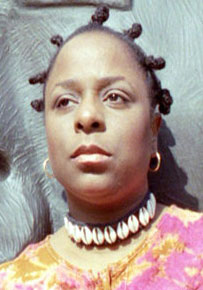
June Jordan, “Poem About My Rights” Black History.

Black History Month– Poems about the body. Your body. Your body.

[…]
alone on the streets/alone not being the point/
the point being that I can’t do what I want
to do with my own body because I am the wrong
sex the wrong age the wrong skin and
suppose it was not here in the city but down on the beach/
or far into the woods and I wanted to go
there by myself thinking about God/or thinking
about children or thinking about the world/all of it
disclosed by the stars and the silence:
I could not go and I could not think and I could not
stay there
alone
as I need to be
alone because I can’t do what I want to do with my own
body and
who in the hell set things up
like this
[…]

I am the history of battery assault and limitless
armies against whatever I want to do with my mind
and my body and my soul and
whether it’s about walking out at night
or whether it’s about the love that I feel or
whether it’s about the sanctity of my vagina or
the sanctity of my national boundaries
or the sanctity of my leaders or the sanctity
of each and every desire
that I know from my personal and idiosyncratic
and indisputably single and singular heart
[…]

but let this be unmistakable this poem
is not consent I do not consent
to my mother to my father to the teachers
[…]

I am not wrong: Wrong is not my name
My name is my own my own my own
and I can’t tell you who the hell set things up like this
but I can tell you that from now on my resistance
my simple and daily and nightly self-determination
may very well cost you your life

June Jordan. “Poem about my rights”

June Jordan, “Poem About My Rights” from Directed By Desire: The Collected Poems of June Jordan (Port Townsend, WA: Copper Canyon Press, 2005). Copyright © 2005 by The June M. Jordan Literary Trust.