From Uyghur Poems published by Everyman’s Library, edited by Aziz Isa Elkun, translated by Aziz Isa Elkun and others.
Colonial power China (now 2026) has occupied the independent country Uyghuristan since 1949, with help of the Russian army. 2 million Uyghurs are behind bars in concentration camps, forced into becoming “Chinese”, forced into labour, forced to deny their Abrahamic religion, Islam. Women and young girls sa-ed by the prison guards.
Uyghur poetry lives.
Hazy (gungga) poetry by Ekhmetjan Osman:
Drum Dance
The wind of revelation casts God to the dirt when the call to prayer sounds in the body mosque
Clay Oven
The wine chased out of the city blooms in gold – it is the mind we have forgotten.
Touris, white man, wipin his face, Met me in Golden Grove market place. He looked at m’ol’ clothes brown wid stain , An soaked right through wid de Portlan rain, He cas his eye, turn up his nose, He says, ‘You’re a beggar man, I suppose?’ He says, ‘Boy, get some occupation, Be of some value to your nation.’ I said, ‘By God and dis big right han You mus recognize a banana man.
‘Up in de hills, where de streams are cool, An mullet an janga swim in de pool, I have ten acres of mountain side, An a dainty-foot donkey dat I ride, Four Gros Michel, an four Lacatan, Some coconut trees, and some hills of yam, An I pasture on dat very same lan Five she-goats an a big black ram, Dat, by God an dis big right han Is de property of a banana man.
‘I leave m’yard early-mornin time An set m’foot to de mountain climb, I ben m’back to de hot-sun toil, An m’cutlass rings on de stony soil, Ploughin an weedin, diggin an plantin Till Massa Sun drop back o John Crow mountain, Den home again in cool evenin time, Perhaps whistling dis likkle rhyme, Praise God an m’big right han I will live an die a banana man.
‘Banana day is my special day, I cut my stems an I’m on m’way, Load up de donkey, leave de lan Head down de hill to banana stan, When de truck comes roun I take a ride All de way down to de harbour side— Dat is de night, when you, touris man, Would change your place wid a banana man. Yes, by God, an m’big right han I will live an die a banana man.
‘De bay is calm, an de moon is bright De hills look black for de sky is light, Down at de dock is an English ship, Restin after her ocean trip, While on de pier is a monstrous hustle, Tallymen, carriers, all in a bustle, Wid stems on deir heads in a long black snake Some singin de sons dat banana men make, Like, Praise God an m’big right han I will live an die a banana man.
‘Den de payment comes, an we have some fun, Me, Zekiel, Breda and Duppy Son. Down at de bar near United Wharf We knock back a white rum, bus a laugh, Fill de empty bag for further toil Wid saltfish, breadfruit, coconut oil. Den head back home to m’yard to sleep, A proper sleep dat is long an deep. Yes, by God, an m’big right han I will live an die a banana man.
‘So when you see dese ol clothes brown wid stain, An soaked right through wid de Portlan rain, Don’t cas your eye nor turn your nose, Don’t judge a man by his patchy clothes, I’m a strong man, a proud man, an I’m free, Free as dese mountains, free as dis sea, I know myself, an I know my ways, An will sing wid pride to de end o my days Praise God an m’big right han I will live an die a banana man.’
You will not need kindling. I think I’ll go up quick as summer timber, my anger big and dry as a plantation that dreams of being paper: the updraft already made in the canopy, and heading down.
Bring your axe to split me into parts that you can stack over the dry leaves, over the coals: my old coat and my bedding box, the things given to me by women. You’ve heard of spontaneous human combustion. They say it’s fat: once lit, it flares so white-hot fast the bones give in. Make your touch-paper long.
Spread the word that the crowd who will gather should stand well back. I am coated in the accelerant of men: my craving for their good necks, their bodies in button-downs crisp as a new book.
As you douse the embers I will smell like ground elder choking the cemetery — roots looping up out of dead women’s mouths, a problem thing you’ll never get cleared.
Make the stake thick, the bonds stiff on my innocent wrists. Burn me the same way you burned her: do it because we took the plain thoughts from our own heads into the square, and spoke.
From How to burn a woman (pub. Bloodaxe, 2021)
After the horrendous anti-women hatred from Donald and his cult and anyone who voted for him, this poem is raw and fits perfectly in this evening of motors revving dying away and leafs smacking the window.
From the publisher: Calling Down the Sky is a poetry collection that describes deep personal experiences and post-generational effects of the Canadian Aboriginal Residential School confinements in the 1960’s when thousands of First Nations, Métis, and Inuit children were placed in these schools against their parents’ wishes.
Many were forbidden to speak their language and practice their own culture. Rosanna Deerchild exposes how the Residential Schools systematically undermined Aboriginal culture across Canada and disrupted families for generations, severing the ties through which Aboriginal culture is taught and sustained, and contributing to a general loss of language and culture.
The devastating effects of the residential schools are far-reaching and continue to have significant impact on Aboriginal communities.
rosanna deerchild, calling down the sky
people ask me all the time about residential schools as if it’s their business or something
ever since that white guy nete in ottawa said he was sorry
as if he knows anything about those places
he wasn’t there he doesn’t know
he wasn’t there when i needed comfort when i cried
he doesn’t know what that priest did what those nuns did
you can’t say sorry for those things for what happened there
he’s got no right
share your story he says what does that even mean
boy these misti-gu-su and their fancy talk
share your story as if it’s that easy
anyway it was a long time ago
fifty years since those days fifty years i said nothing
the words they get caught right here in my throat
where the nuns would grab when we spoke Cree
as if grabbing a dead duck’s neck haul us up in front of that class
stand there so long, we pissed ourselves
you learn pretty quickly to stay quiet after that boy
no we never talk about it
not back home not with each other not even when it was happening,
you just tried to forget about it leave it behind
some of us did some of us are still trying
it always finds you though drags you back
don’t make up stories that’s what they told us kids
when we went back home told them what was going on in those schools
still got sent back every year less of us came home
still they said nothing until we were nothing just empty skins
full of broken english ruler broken bones bible broken spirits
and back home became a broken dream
no damage done for all but five years
that’s what it said in the letter about my residential school story
dear claimant no records no proof
sorry
nine years that’s how long they kept me in there
i was just a baby when they came for me
father died on the trapline mother in the tb sanatorium
didn’t even get to say goodbye never saw them again
nine years you know what i got for that
deaf in one ear blind in one eye
scars all over my head my legs don’t work arthritis
diabetes from what we ate there you know i never once saw fruit
can’t get no damn sleep the dead keep me awake eh ask me for forgiveness
but you can’t forgive and forget the unnameable
there is no word for what they did in our language
to speak it is to become torn from the choking
money got no cure for that
now i’m almost seventy
and you want me to share my story
ok then here it is here in the unwritten here in the broken lines of my body that can never forget
There’s a light, a certain kind of light that has never shone on me— Nina’s version. Not the Bee Gees or even Janis Joplin,
but the way Nina sings it, almost a plea. Not the studio version either. No, her performance in Antibes. Her earrings
dangling their own mute musics, her silk headwrap an aureole of sorts. The sheen of her face a thesis in Black glamor sui generis.
I want to be glamorous in the way she was glamorous. The way women I knew growing up were glamorous: campy, yes, but regal.
If I knew of Nina then I would have drawn her. Drawing being how I coped with the expurgated chorus of my girlchildhood.
I drew women then because I could not be one. Nina knew a life of could-nots too. Little girl blue rejected from music school.
Aye, I knew the blues; still do. My godmother Pat whupped my ass when she caught a glimpse of me at her vanity tracing my mouth with her carmine matte lipstick
blues. I’m still afraid to touch my face with shade #309 blues. The same hue of blues that would make someone want to cry, I’m a woman. . .Can’t you see what I am? I live & I breathe
for you! But Nina? Oh Nina— the way she sings it. I imagine myself singing the same way to the deferred girl at the vanity, assuring her:
Baby, you don’t know what it’s like to love somebody, to love somebody—I ain’t finished—
to love somebody, oh, to love somebody, to love somebody
When the stranger bumps his shoulder into me, hard, without an ounce of concern, I can feel the fire bubbling inside of me. The heat from the concrete rising up, through my feet, reverberating like electricity about to erupt magma through every orifice of my body. Lava that will oxidize every atom and molecule of his body on contact. The city as embodied trauma. The trauma of settlement. I spin around to yell after him, letting the anger fully consume my spirit as it has so many times before. I don’t know where the empowerment ends and the dissolution begins anymore.
Lindsay Nixon, “niya” from “Toxic Masculinities” in Nîtisânak. Text licensed under Creative Commons NY-NC-ND 4.0 2018 by Lindsay Nixon. Reprinted by permission of the author.
I thought this was about a woman! Still is for me.
The ’37 Chevy pickup, retired to a rest
of rust and thistles, sloughed off its front
wheels—the better to munch the sod and
ruminate on great loads hauled: lumber,
a keg of nails, the tools and paint
for their first frame farmhouse, then
the bed, a castiron cookstove with its
clatter of pans, plus the barbwire and
feedbags, a pump… later, kids
and hogs and heifers to the county fair.
Lasting out the War to End All Wars, and
then Korea, she earned her ease, turned
out to pasture by the old woodlot, where
time and the weather wrought a work of art,
making her a monument to herself.
by John Haag
Born in Idaho in1926, John Haag was a member of the Merchant Marine during World War II and a naval veteran of the Korean conflict.
According to the editors of The Greek Poets, Archilochus was an a-hole. Some of his poetry does make him sound like a piece of work, rape, wishing rape upon friends. Other poems are beautiful and funny.
The first one makes me think of the woman I am with, her long curly hair falls down like that. The second one make me grin.
“She took the myrtle branch and sang in turn
another song of pleasure, in her left hand still
the flower of the rose tree, and let loose
over her naked shoulder, down her arm
and back, the darkness of her hair.”
Translated by Brooks Haxton
The fox knows many tricks, the hedgehog only one.
One good one.
To the Man Who Shouted “I Like Pork Fried Rice” at Me on the Street by Frannie Choy.
you want to eat me out. right. what does it taste like you want to eat me right out of these jeans & into something a little cheaper. more digestible. more bite-sized. more thank you
come: i am greasy
for you. i slick my hair with msg
every morning. i’m bad for you.
got some red-light district between
your teeth. what does it
taste like: a takeout box
between my legs.
plastic bag lady. flimsy white fork
to snap in half. dispose of me.
taste like dried squid. lips puffy
with salt. lips brimming
with foreign so call me
pork. curly-tailed obscenity
been playing in the mud. dirty meat.
worms in your stomach. give you
a fever. dead meat. butchered girl
chopped up & cradled in…
From the drug dealers, heart surgeons, stuck at rock bottom, ten years sober, servin’ a dime to life, ex-con turned youth-minister, trans*, gay, D.L., paraplegic, Olympic gold-medal winnin’, current U.S. presidency presidin’, illiterate, artistic, broke as a joke, ballin’, dark-skindid, light-skindid, country-bama, Brooklyn-bred, OG, GD, Rasta bombaclot, to the European transplant and etc.
And no matter how many Jim Crow laws you revise, nothin’ can change that. I grew up with black* men. I’ve fought with black* men. And black* men have fought, for me. Hell, I was supposed to be, a black*, man. I’ve been insulted by black* men. I’ve been consoled by black* men. I’ve been schooled, had my socks knocked off, and mind blown by black* men. I’ve loved black* men, and had the privilege of having them love me back.
(…)
ATTENTION BLACK MEN:
Black* transwoman to black* cis/trans* man. I revere and respect you for living brave in a world that hunts you with hypocritical indignation. I thank you for living in the body I couldn’t and doing it with such swag, intellect, and a vengeance.
As a black* transwoman I want you to know that I never abandoned you or took the easy way out. A war was waged on black* bodies the moment the first slave touched Virginian soil in the 1600′s. So I transitioned from “male” to “female” because I just needed to be in more comfortable battle fatigues.
(…)
“KOKUMỌ is an African-American transgender woman and product of Chicago’s South Side. To KOKUMỌ surviving is passé. Therefore, she believes in sanctioning artistic, political, and actual space for other Trans, Gender Non-Conforming, and Intersex (TGI) people of color to thrive in. In accordance to this belief and her name, she created KOKUMỌMEDIA. KOKUMỌMEDIA uses film, music, and literature to create and generate realistic depictions of TGI people of color.”
No snow yet…But that silence after the first snow. The sounds suddenly different! The thick quiet blanket and little paw prints! I’m actually looking forward. That is a first for this Aruban exile.
1
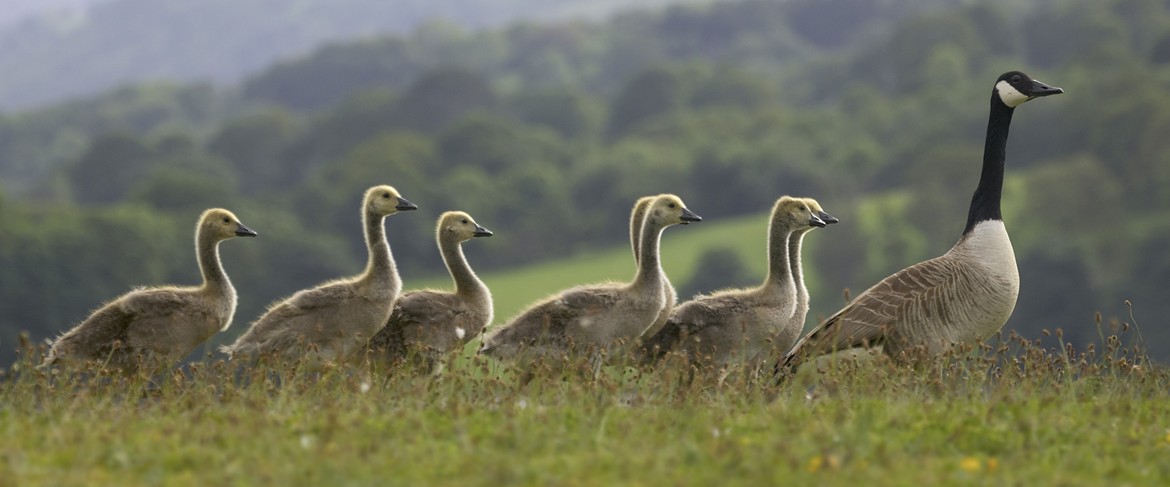
The Canada geese
Pose in the light and dark of ripples,
And in and out of narrow shadows
Pose, compose, improvising
Their endless eloquent line.
The Swan’s Feet
Who is this whose feet
Close on the water,
Like muscled leaves darker than ivy
Blown back and curved by unwearying wind?
They, that thrust back the water,
Softly crumple now and close, stream in his wake.
These dank weeds are also
Part and plumage of the magnolia-flowering swan.
He puts forth these too—
Leaves of ridged and bitter ivy
Sooted in towns, coal-bright with rain.
He is not moved by winds in air
Like the vain boats on the lake.
Lest you think him too a flower of parchment,
Scentless magnolia,
See his living feet under the water fanning.
In the leaves’ self blows the efficient wind
That opens and bends closed those leaves.
Edith Joy Scovell, called Joy, was born in Sheffield, South Yorkshire, in 1907 and she went up to Somerset College, the women’s college founded at Oxford University in 1879.
Scovell accompanied her husband, the distinguished Oxford ecologist and naturalist Charles Elton, to Central and South America and the West Indies as a recorder and field researcher.


 niya
niya