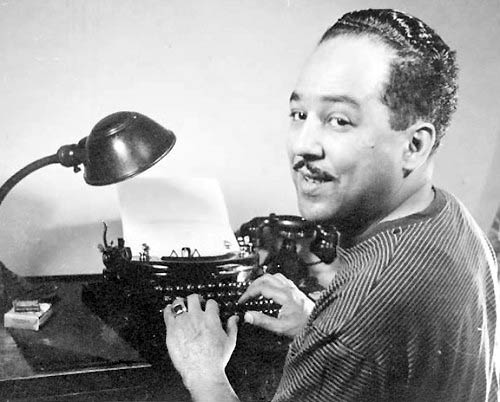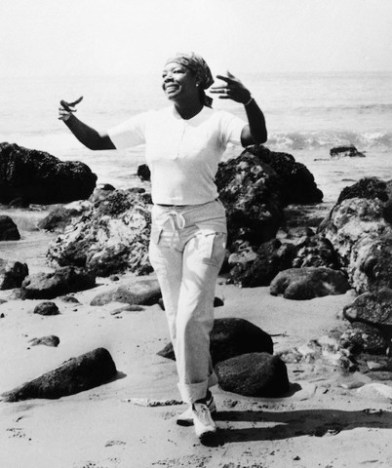
America never was America to me, And yet I swear this oath— America will be! Langston Hughes, Ferguson!

 hughes2
A writer dreams.
Let America be America again.
Let it be the dream it used to be.
Let it be the pioneer on the plain
Seeking a home where he himself is free.

(America never was America to me.)

Let America be the dream the dreamers dreamed—
Let it be that great strong land of love
Where never kings connive nor tyrants scheme
That any man be crushed by one above.

(It never was America to me.)

O, let my land be a land where Liberty
Is crowned with no false patriotic wreath,
But opportunity is real, and life is free,
Equality is in the air we breathe.

(There’s never been equality for me,
Nor freedom in this “homeland of the free.”)

Say, who are you that mumbles in the dark? 
And who are you that draws your veil across the stars?

I am the poor white, fooled and pushed apart,
I am the Negro bearing slavery’s scars.
I am the red man driven from the land,
I am the immigrant clutching the hope I seek—
And finding only the same old stupid plan
Of dog eat dog, of mighty crush the weak.

I am the young man, full of strength and hope,
Tangled in that ancient endless chain
Of profit, power, gain, of grab the land!
Of grab the gold! Of grab the ways of satisfying need!
Of work the men! Of take the pay!
Of owning everything for one’s own greed!

I am the farmer, bondsman to the soil.
I am the worker sold to the machine.
I am the Negro, servant to you all.
I am the people, humble, hungry, mean—
Hungry yet today despite the dream.
Beaten yet today—O, Pioneers!
I am the man who never got ahead,
The poorest worker bartered through the years.

Yet I’m the one who dreamt our basic dream
In the Old World while still a serf of kings,
Who dreamt a dream so strong, so brave, so true,
That even yet its mighty daring sings
In every brick and stone, in every furrow turned
That’s made America the land it has become.
O, I’m the man who sailed those early seas
In search of what I meant to be my home—
For I’m the one who left dark Ireland’s shore,
And Poland’s plain, and England’s grassy lea,
And torn from Black Africa’s strand I came
To build a “homeland of the free.”

The free?

Who said the free?  Not me?
Surely not me?  The millions on relief today?
The millions shot down when we strike?
The millions who have nothing for our pay?
For all the dreams we’ve dreamed
And all the songs we’ve sung
And all the hopes we’ve held
And all the flags we’ve hung,
The millions who have nothing for our pay—
Except the dream that’s almost dead today.

O, let America be America again—
The land that never has been yet—
And yet must be—the land where every man is free.
The land that’s mine—the poor man’s, Indian’s, Negro’s, ME—
Who made America,
Whose sweat and blood, whose faith and pain,
Whose hand at the foundry, whose plow in the rain,
Must bring back our mighty dream again.

Sure, call me any ugly name you choose—
The steel of freedom does not stain.
From those who live like leeches on the people’s lives,
We must take back our land again,
America!

O, yes,
I say it plain,
America never was America to me,
And yet I swear this oath—
America will be!

Out of the rack and ruin of our gangster death,
The rape and rot of graft, and stealth, and lies,
We, the people, must redeem
The land, the mines, the plants, the rivers.
The mountains and the endless plain—
All, all the stretch of these great green states—
And make America again!

Robert Bly – Driving toward the Lac Qui Parle River

Car seats on porches, lamp light and a torn willow tree in an open field.

From “Contemporary American Poetry” (1962) these lovely, happy poems about solitude:

Driving toward the Lac Qui Parle River
BY ROBERT BLY
I
I am driving; it is dusk; Minnesota.
The stubble field catches the last growth of sun.
The soybeans are breathing on all sides.
Old men are sitting before their houses on car seats
In the small towns. I am happy,
The moon rising above the turkey sheds.
[…]
III
Nearly to Milan, suddenly a small bridge,
And water kneeling in the moonlight.
In small towns the houses are built right on the ground;
The lamplight falls on all fours on the grass.
When I reach the river, the full moon covers it.
A few people are talking, low, in a boat.

Hunting Pheasants in a Cornfield
BY ROBERT BLY
I
What is so strange about a tree alone in an open field?
It is a willow tree. I walk around and around it.
The body is strangely torn, and cannot leave it.
At last I sit down beneath it.

II
It is a willow tree alone in acres of dry corn.
Its leaves are scattered around its trunk, and around me,
Brown now, and speckled with delicate black.
Only the cornstalks now can make a noise.

The sun is cold, burning through the frosty distances of space.
The weeds are frozen to death long ago.
Why then do I love to watch
The sun moving on the chill skin of the branches?

[…]

Robert Bly, “Driving toward the Lac Qui Parle River” from Silence in the Snowy Fields (Middletown, Conn.: Wesleyan University Press, 1962). Copyright © 1962 by Robert Bly.

USED: http://www.abebooks.com/servlet/SearchResults?an=donald+hall&sts=t&tn=Contemporary+American+Poetry

NEW: http://www.indiebound.org/book/9780140586183

Lula Lowe Weeden- Black Poet full of surprises and twists!

Do you know of the poet Lula Lowe Weeden? She is amazing and has these surprises in her poems!

“Robin Red Breast”

Little Robin red breast,
I hear you sing your song.
I would love to have you put it into my little cage,
Into my little mouth.

“Dance”

Down at the hall at midnight sometimes,
You hear them singing rhymes.
These girls are dancing with boys.
They are too big for toys.

From “Caroling Dusk: an Anthology of Verse by Black Poets.” Edited by Countee Cullen.

NEW and USED: http://www.abebooks.com/servlet/BookDetailsPL?bi=12331091523

Maya Angelou, phenomenal woman.

ImageImageImageImageImageImage


When Great Souls Die

When great trees fall,
rocks on distant hills shudder,
lions hunker down in tall grasses,
and even elephants lumber after safety. When great trees fall in forests,
small things recoil into silence, their senses eroded beyond fear.

When great souls die,
the air around us becomes light, rare, sterile.
We breathe, briefly.
Our eyes, briefly, see with a hurtful clarity. Our memory, suddenly sharpened, examines, gnaws on kind words unsaid, promised walks never taken.
Great souls die and our reality, bound to them, takes leave of us.
Our souls, dependent upon their nurture, now shrink, wizened.
Our minds, formed and informed by their radiance, fall away.
We are not so much maddened as reduced to the unutterable ignorance of dark, cold caves.
And when great souls die, after a period peace blooms, slowly and always irregularly.
Spaces fill with a kind of soothing electric vibration.
Our senses, restored, never to be the same, whisper to us.
They existed.
They existed.
We can be.
Be and be better.
For they existed.


——-


Phenomenal Woman

Pretty women wonder where my secret lies.
I’m not cute or built to suit a fashion model’s size
But when I start to tell them,
They think I’m telling lies.
I say,
It’s in the reach of my arms
The span of my hips,
The stride of my step,
The curl of my lips.
I’m a woman
Phenomenally.
Phenomenal woman,
That’s me.

I walk into a room
Just as cool as you please,
And to a man,
The fellows stand or
Fall down on their knees.
Then they swarm around me,
A hive of honey bees.
I say,
It’s the fire in my eyes,
And the flash of my teeth,
The swing in my waist,
And the joy in my feet.
I’m a woman
Phenomenally.
Phenomenal woman,
That’s me.

Men themselves have wondered
What they see in me.
They try so much
But they can’t touch
My inner mystery.
When I try to show them
They say they still can’t see.
I say,
It’s in the arch of my back,
The sun of my smile,
The ride of my breasts,
The grace of my style.
I’m a woman

Phenomenally.
Phenomenal woman,
That’s me.

Now you understand
Just why my head’s not bowed.
I don’t shout or jump about
Or have to talk real loud.
When you see me passing
It ought to make you proud.
I say,
It’s in the click of my heels,
The bend of my hair,
the palm of my hand,
The need of my care,
‘Cause I’m a woman
Phenomenally.
Phenomenal woman,
That’s me.

Maya Angelou
Breasts, beautiful breasts. Quiet. Heaving. Black, brown, yellow, pink. Strong breasts! 1/2

Image

Image

Adapted for Aviva!

Spring is short
what is there that has eternal life
I said and
made her hands seek out
my powerful breasts
[trans. Janine Beichman] Akiko

>Image

Willa Cather. The Hawthorn Tree

ACROSS the shimmering meadows–
Ah, when she came to me!
In the spring-time,
In the night-time,
In the starlight,
Beneath the hawthorn tree.

Up from the misty marsh-land–
Ah, when she climbed to me!
To my white bower,
To my sweet rest,
To my warm breasts,
Beneath the hawthorn tree.

Ask of me what the birds sang,
High in the hawthorn tree;
What the breeze tells,
What the rose smells,
What the stars shine–
Not what she said to me!


.

Song 2 by Anne Bronte

But I would rather press the mountain heath,
With naught to shield me from the starry sky,
And dream of yet untasted victory —
A distant hope — and feel that I am free!

O happy life! To range the mountains wild,
The waving woods — or Ocean’s heaving breast,
With limbs unfettered, conscience undefiled,
And choosing where to wander, where to rest!

.

.

Buy poetry at Indie booksellers!!

Established in 1970, Glad Day Bookshop is the world’s oldest LGBTQ bookstore and Toronto’s oldest surviving bookstore. In 2012, a group of 23 community members pooled their funds and bought Glad Day Bookshop to save it from closing.

“Our best strategy for survival is adding new revenues streams like food and drink – which means a larger space.
We’ve picked out a great spot on Church Street that would allow us to be a bookstore & coffee shop during the day and a bar at night.
It is wheelchair accessible, with an accessible washroom.

It has a cute patio, a small space for performances and walls for art.

We will be a space where everyone feels welcome, sexy and celebrated.

We will be a queer-owned, indie place on Church Street. We will amplify the love, creativity, sexuality, diversity & liberation that Glad Day Bookshop is known for.”

To the Man Who Shouted “I Like Pork Fried Rice” at Me on the Street by Franny Choy.

ImageImage

http://youtu.be/GS56hTj4XT4 Spoken Word by Frannie Choy!!!

To the Man Who Shouted “I Like Pork Fried Rice” at Me on the Street by Frannie Choy.

you want to eat me
out. right. what does it taste like
you want to eat me right out
of these jeans & into something
a little cheaper. more digestible.
more bite-sized. more thank you

come: i am greasy
for you. i slick my hair with msg
every morning. i’m bad for you.
got some red-light district between
your teeth. what does it
taste like: a takeout box
between my legs.
plastic bag lady. flimsy white fork
to snap in half. dispose of me.

taste like dried squid. lips puffy
with salt. lips brimming
with foreign so call me
pork. curly-tailed obscenity
been playing in the mud. dirty meat.
worms in your stomach. give you

a fever. dead meat. butchered girl
chopped up & cradled
in styrofoam. you candid cannibal.
you want me bite-sized
no eyes clogging your throat.

but i’ve been watching
from the slaughterhouse. ever since
you named me edible. tossed in
a cookie at the end. lucky man.
go & take what’s yours.
name yourself archaeologist but

listen carefully
to the squelches in
your teeth & hear my sow squeal
scream murder between
molars. watch salt awaken
writhe, synapse.
watch me kick
back to life. watch me tentacles
& teeth. watch me
resurrected electric.

what does it
taste like: revenge
squirming alive in your mouth
strangling you quiet
from the inside out.

Robley Wilson Jr. The Opera- Love lost.

Image

Robley Wilson Jr.

The Opera

I regret the going back
to old places— the streets
that are made into freeways,
the plazas and airfields
named after great men who
were alive when we loved.

It is as if by stopping
our attentions to each other
we set something heartless
in motion— that you redid
the world, that I altered
its common names to hide you.

Now that you are lost to me,
I believe I never took you
to hear Rimsky-Korsakov—
you wearing your white dress
with the hot orange shapes
I called kisses-in-the-snow.

Have You Got a Brook in your Little Heart.

Image

Image


Beautiful.

Have You Got a Brook in your Little Heart.

Have you got a brook in your little heart,
Where bashful flowers blow,
And blushing birds go down to drink,
And shadows tremble so?

And nobody knows, so still it flows,
That any brook is there;
And yet your little draught of life
Is daily drunken there.

Then look out for the little brook in March,
When the rivers overflow,
And the snows come hurrying from the hills,
And the bridges often go.

And later, in August it may be,
When the meadows parching lie,
Beware, lest this little brook of life
Some burning noon go dry.

Emily Dickinson.

Every land is the holy land– Watch where the branches of the willows bend! And some haikus… Black Elk, Le Guin, Issa on Friday!

Image Image

Every land is the holy land by Ursula K. Le Guin (November 2006)

From a saying of Black Elk
Watch where the branches of the willows bend
See where the waters of the rivers tend
Graves in the rock, cradles in the sand
Every land is the holy land
Here was the battle to the bitter end
Here’s where the enemy killed the friend
Blood on the rock, tears on the sand
Every land is the holy land
Willow by the water bending in the wind
Bent till it’s broken and it will not stand
Listen to the word the messengers send
Life like the broken rock, death like the sand
Every land is the holy land

.

.
And some haikus for Friday by Issa:

The distant mountains
are reflected in the eye
of the dragonfly

Frog and I,
eyeball
to eyeball.

A sheet of rain.
Only one man remains among
cherry blossom shadows

What good luck!
Bitten by
this year’s mosquitoes too.

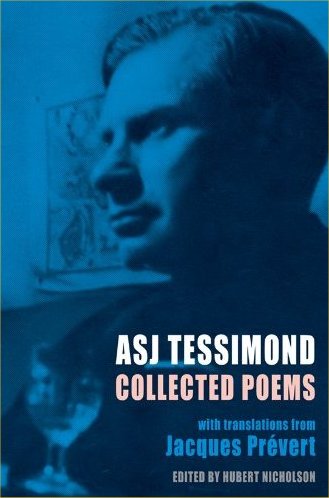
Bits of time and sound by Arthur Seymour John Tessimond. A poet hidden and then almost lost!

Image

Beautiful!

[…]

I am the rails on which the moment passes,
The megaphone for many words and voices:
I am the graph diagram,
Composite face.

[…]

I am the man they call the nation’s backbone,
Who am boneless – playable castgut, pliable clay:
The Man they label Little lest one day
I dare to grow.

I am the led, the easily-fed,
The tool, the not-quite-fool,
The would-be-safe-and-sound,
The uncomplaining, bound,
The dust fine-ground,
Stone-for-a-statue waveworn pebble-round

Arthur Seymour John Tessimond

And in the correct order:

The Man In The Bowler Hat

I am the unnoticed, the unnoticable man:
The man who sat on your right in the morning train:
The man who looked through like a windowpane:
The man who was the colour of the carriage, the colour of the mounting
Morning pipe smoke.
I am the man too busy with a living to live,
Too hurried and worried to see and smell and touch:
The man who is patient too long and obeys too much
And wishes too softly and seldom.

I am the man they call the nation’s backbone,
Who am boneless – playable castgut, pliable clay:
The Man they label Little lest one day
I dare to grow.

I am the rails on which the moment passes,
The megaphone for many words and voices:
I am the graph diagram,
Composite face.

I am the led, the easily-fed,
The tool, the not-quite-fool,
The would-be-safe-and-sound,
The uncomplaining, bound,
The dust fine-ground,
Stone-for-a-statue waveworn pebble-round


http://vimeo.com/70885550 a radio recording of himself reading a poem.

http://thefilter.blogs.com/thefilter/asj_tessimond/


In Canterbury Cathedral

Trees, but straighter than birches, rise to the sky
Of stone. Their branches meet in the sky of stone.
Stone fountains leap and meet: their traceries are
As light as lace. These prayers of stone were prayed
To a God I can’t believe in, but were made
By Man, men almost gods, in whom I can
Believe: were made as strong, to last as long
As time. I stare and pray to Man alone.


[…] leave as your final legacy
A box double-locked by the spider
Packed with your unsolved problems

‘The Children Look at the Parents’

Spring Haikus by Issa – Japanese poet.

Image


Early spring –                                From the bough
stream flows                                 floating downriver,
toward my door                            insect song.

In spring rain
A pretty girl
yawning.

Face of the spring moon –
About twelve years old,
I’d say.

The cricket
proudly pricks up its whiskers
and sings

My spring is just this:
a single bamboo shoot,
a willow branch

Moist spring moon –
raise a finger
and it drips.

The spring day
Lingers
In the pools.

Blossoms at night,
and the faces of people
moved by music.


A world of trials,
and if the cherry blossoms,
it simply blossom


Moon, plum blossoms,
this, that,
and the day goes.

Not very anxious
to bloom,
my plum tree

The new year arrived
in utter simplicity –
and a deep blue sky

People working fields,
from my deepest heart, I bow.
Now a little nap.

Before I arrived,
who were the people living here?
Only violets remain.


Black History- Poetry. John Agard celebrates the British Anthem!

ImageImageImage

Alternative Anthem

Put the kettle on
Put the kettle on
It is the British answer
to Armageddon.

Never mind taxes rise
Never mind trains are late
One thing you can be sure of
and that’s the kettle, mate.

It’s not whether you lose
It’s not whether you win
It’s whether or not
you’ve plugged the kettle in.

May the kettle ever hiss
May the kettle ever steam
It is the engine
that drives our nation’s dream.

Long live the kettle
that rules over us
May it be limescale free
and may it never rust.

Sing it on the beaches
Sing it from the housetops
The sun may set on empire
but the kettle never stops.”
― John AgardAlternative Anthem: Selected Poems

450615725-2

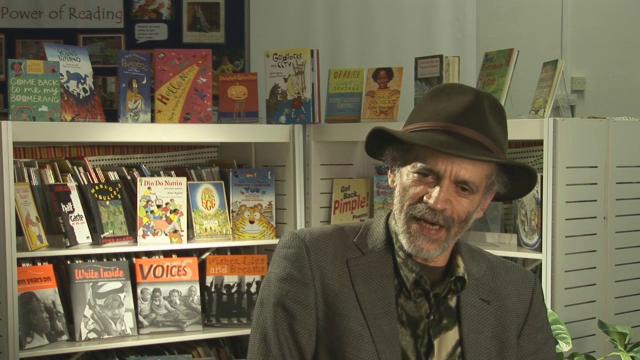
He has a twinkle in his eye!

Black History: The World is Your Body. “Teaching My Mother to Give Birth” by Warsan Shire

Image


ImageImage

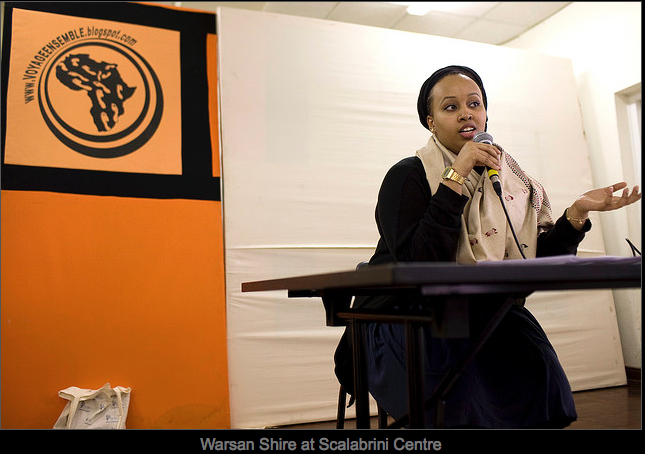
London’s first young poet laureate!!!

Teaching My Mother to Give Birth by Warsan Shire:

“later that night
i held an atlas in my lap
ran my fingers across the whole world
and whispered
where does it hurt?”

it answered
everywhere
everywhere
everywhere.”
― Warsan Shire

USED: http://www.abebooks.com/servlet/BookDetailsPL?bi=11212527987
NEW: http://www.indiebound.org/book/9781905233298

Poems about the body: African-American poet, Yusef Komunyakaa.

Image

Poems about the body: African-American poet, Yusef Komunyakaa.

[…]
I love my crooked feet
shaped by vanity & work
shoes made to outlast
belief. The hardness
coupling milk it can’t
fashion. I love the lips,
salt & honeycomb on the tongue.
The hair holding off rain
& snow. The white moons
on my fingernails. I love
how everything begs
blood into song & prayer
inside an egg. A ghost
hums through my bones
like Pan’s midnight flute
shaping internal laws
beside a troubled river.
I love this body
made to weather the storm
in the brain, raised
out of the deep smell
of fish & water hyacinth,
out of rapture & the first
regret. I love my big hands.
I love it clear down to the soft
quick motor of each breath,
the liver’s ten kinds of desire
& the kidney’s lust for sugar.
This skin, this sac of dung
& joy, this spleen floating
like a compass needle inside
nighttime, always divining
West Africa’s dusty horizon.
I love the birthmark
posed like a fighting cock
on my right shoulder blade.
I love this body, this
solo & ragtime jubilee
behind the left nipple,
because I know I was born
to wear out at least
one hundred angels.