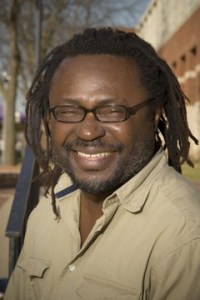
 Favourite lines:
Icicles fall from trees,...they limber
like the gods terrified into silence,
like tall brooding deities looming out of the fog:
The cypress -whitening-
...;wearing her best habit,
a pale green in the forest of ghosts-
And so I walk through this windless night
through the narrow imponderable road
through the silence - the silence of trees-
I hear not even the gust of wind
I hear only the quiet earth, thawing underneath;
I hear the slow silent death of winter-
when the sun is yellowest
...to every good, to every
flicker of stars along the pine
shadows;
to every tussle with lucid dusk,
to every moonlit pledge, to
every turn made to outleap
silvery pollen,
I have desired to listen,...
Favourite lines:

Icicles fall from trees,...they limber
like the gods terrified into silence,
like tall brooding deities looming out of the fog:

The cypress -whitening-
...;wearing her best habit,
a pale green in the forest of ghosts-

And so I walk through this windless night
through the narrow imponderable road
through the silence - the silence of trees-

I hear not even the gust of wind
I hear only the quiet earth, thawing underneath;
I hear the slow silent death of winter-

when the sun is yellowest

...to every good, to every
flicker of stars along the pine
shadows;
to every tussle with lucid dusk,
to every moonlit pledge, to
every turn made to outleap
silvery pollen,

I have desired to listen,...
USED and NEW: http://www.abebooks.com/servlet/BookDetailsPL?bi=2685567879
NEW through independent bookstores, book on Nigerian lyrical poet: http://www.indiebound.org/book/9781847010131
“Obi Nwakanma is one of the Nigerian literary awards winning troika invited by Harvard University to represent New Voices From Nigeria at a recent Africa Events Reading (the other two being Maik Nwosu and Akin Adesokan also featured on this site).
Poet and journalist, he featured at the Poetry International Festival in 1995.
Holder of a BA degree from the University of Jos in Nigeria, Nwakanma was a visiting scholar at one of the pre-eminent universities in Nigeria, UN at Nsukka. Formerly an Assistant Editor at the Sunday Vanguard, he is currently a visiting scholar at The Meeting School, Rindge, NH, where he teaches Literature, Creative Writing and Journalism.”
http://www.poetrysoup.com/biography/obi_nwakanma
“Thirsting for Sunlight, his biography of the tragic modernist poet, Christopher Okigbo, was published by James Currey (UK) in 2010.
His collection of poems, The Horsemen & Other Poems, was published by Africa World Press (New Jersey) in 2007. Nwakanma’s first collection of poems, The Roped Urn, was awarded the Cadbury Prize in 1996 by the Association of Nigerian Authors, and he received the Walter J. Ong Award for Distinguished Achievement in 2008 from Saint Louis University.
His poetry, fiction and essays have appeared in various anthologies and publications including Okike, Vanguard Review, Callaloo, and Wasafiri. His poetry has been translated into Spanish, Dutch, German, and Turkish.
Obi Nwakanma has also worked as a professional journalist, reporting internationally for Newsweek, Neue Zurcher Zeitung, and as Group Literary editor for the Vanguard,one of the major national newspapers in Nigeria, for which he continues to write a weekly column, “The Orbit” in the Sunday Vanguard.

He is currently working on a novel, a new collection of poems, and a book on The Mbari Movement, Transnationalism and Modern African Literature.”
In FULL:
ICICLES fall from trees, molten with age,
without memory - they stand aloof in their
nakedness - they limber;
like the gods terrified into silence,
like tall brooding deities looming out of the
fog:

The forest hugs them
carves them into stones,
Etches them into the slow
eastern landscape: rivers, hills
the slow running water,
times broken inscapes…

The willows are burdened with ice
the white shrouds of burial spread
upon the earth's ravaged face; the eyes
unseeing, the mouth unspeaking,
a gust of wind proclaims the anger of
immemorial ages; the cycle, the
eternal ritual of mystical returns -

The cypress - whitening -
boneless; wearing her best habit,
a pale green in the forest of ghosts -

And so I walk through this windless night
through the narrow imponderable road
through the silence - the silence of trees -

I hear not even the gust of wind
I hear only the quiet earth, thawing underneath;
I hear the slow silent death of winter -

where the sun is yellowest.

But above, Monadnock looms
like some angry Moloch, her
white nipple seizing the space

drained of all milk.
.
.


A she-devil beckoning to worshippers
seductive - her arm stretching outwards -
to this lonely pilgrim
lost in the mist:

Behold the school of wild bucks
Behold the meeting of incarnate
spirits -
Behold the lost souls bearing tapers
in rags of rich damask,
Down Thomas - the saint of
unbelievers - down the road to bliss
Down to the red house, uncertain
like a beggar's bowl hanging unto the cliff
of withdrawn pledges, where the well is
deepest.
.
.


I have dared to live
beneath the great untamed.


To every good, to every
flicker of stars along the pine
shadows;
To every tussle with lucid dusk,
To every moonlit pledge, to
every turn made to outleap
silvery pollen,

I have desired to listen - to listen -
to the ripening of seasons.
.
.
.


Winter 2001
This is ONE of a continuing sequence.


 Awesome poetry from all over.