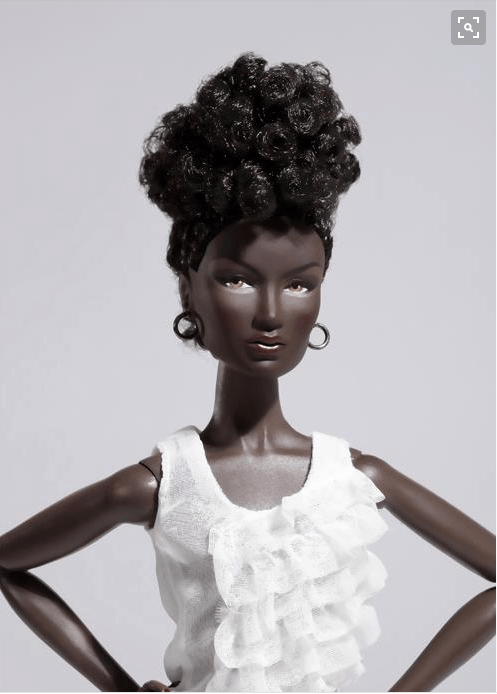
Daisies by Genevieve Sambrook

Daisies

Wednesday I kissed every inch
of your pulsing neck
and I held your waist
so close to my heart
our breathing matched
you asked me why
I haven’t written
a poem in a while
You joked that I was
lacking inspiration
but darling
the heaviest words are so quiet
when something feels right
you just breathe

and so do I

I heard last week on the radio
that for burn victims the only way
to save a limb is to cut it
until it bleeds
so you know where the living starts
every spring my mother has
me slice apart her flowers
she says they grow back
healthier if you remove what has died
darling I’ve been cutting to
the living part for
as long as I can remember
I would like to think I am
growing back
.

from: We Will Be Shelter, poems for survival. Ed. Andrea Gibson. A write bloody book.

#ForgottenFire Suzy La Follette #iNeedFeminismBecause

article-2694451-1FAA2DBC00000578-872_634x419

Nothing is gentle for me here. The fire’s
heat is brief, occasional. it’s their eyes
that burn the back of my neck. I was hired
through the same requirements and I’ll rise
through the ranks with the same tests. Yet, somehow
I’ll have more. With every alarm I prove
my strength, prove my skill prove my worth. My brow
furrowed, clothes soaked with sweat. But all my moves
are soon forgotten, disappear like steam
rising from my head, with helmets removed.
Surely, when they tell stories they don’t mean
to forget me, but they do. In their truth
it must’ve been one of the guys, that pulled
that body from the car. Now who’s the fool?

Suzy La Follette

Career firefighter, poet, singer Arti Twit and the Alibis. From Austin, Texas.

http://www.girlsrockaustin.org
http://www.annrichardsschool.org

From: We Will Be Shelter, edited by Andrea Gibson.

Buy from the World’s Oldest LGBTQ bookstore here: support our community, Glad Day Needs You, you need Glad Day 🙂 !
or from an Indie bookstore here
Or try abebooks.com here

Natalie Diaz It Was The Animals

#

It Was the Animals

BY NATALIE DIAZ

Today my brother brought over a piece of the ark
wrapped in a white plastic grocery bag.
He set the bag on my dining table, unknotted it,
peeled it away, revealing a foot-long fracture of wood.
He took a step back and gestured toward it
with his arms and open palms —
            It’s the ark, he said.
            You mean Noah’s ark? I asked.
            What other ark is there? he answered.
            Read the inscription, he told me,
            it tells what’s going to happen at the end.
            What end? I wanted to know.
            He laughed, What do you mean, “what end”?
            The end end.
Then he lifted it out. The plastic bag rattled.
His fingers were silkened by pipe blisters.
He held the jagged piece of wood so gently.
I had forgotten my brother could be gentle.
He set it on the table the way people on television
set things when they’re afraid those things might blow-up
or go-off — he set it right next to my empty coffee cup.
It was no ark —
it was the broken end of a picture frame
with a floral design carved into its surface.
He put his head in his hands —
            I shouldn’t show you this — 
            God, why did I show her this?
            It’s ancient — O, God,
            this is so old.
            Fine, I gave in, Where did you get it?
            The girl, he said. O, the girl.
            What girl? I asked.
            You’ll wish you never knew, he told me.
I watched him drag his wrecked fingers
over the chipped flower-work of the wood —
            You should read it. But, O, you can’t take it — 
            no matter how many books you’ve read.
He was wrong. I could take the ark.
I could even take his marvelously fucked fingers.
The way they almost glittered.
It was the animals — the animals I could not take —
they came up the walkway into my house,
cracked the doorframe with their hooves and hips,
marched past me, into my kitchen, into my brother,
tails snaking across my feet before disappearing
like retracting vacuum cords into the hollows
of my brother’s clavicles, tusks scraping the walls,
reaching out for him — wildebeests, pigs,
the oryxes with their black matching horns,
javelinas, jaguars, pumas, raptors. The ocelots
with their mathematical faces. So many kinds of goat.
So many kinds of creature.
I wanted to follow them, to get to the bottom of it,
but my brother stopped me —
            This is serious, he said.
            You have to understand.
            It can save you.
So I sat down, with my brother wrecked open like that,
and two-by-two the fantastical beasts
parading him. I sat, as the water fell against my ankles,
built itself up around me, filled my coffee cup
before floating it away from the table.
My brother — teeming with shadows —
a hull of bones, lit only by tooth and tusk,
lifting his ark high in the air.
Source: Poetry (March 2014).

Black Poet, White Poet #BlackLivesMatter LaWanda Walters

#iNeedFeminismBecause # intersectionality #maleprivilege

Screen Shot 2015-12-10 at 10.46.34 PM

A white woman poet using a black poet’s invention… No actual reflection done by the poet, so the problem with *using* is still there. But that can be changed! Both poems are beautiful in different ways.

This is the striking original:

The Pool Players.
Seven at the Golden Shovel.
            We real cool. We
            Left school. We

.

            Lurk late. We
            Strike straight. We

.

            Sing sin. We
            Thin gin. We

.

            Jazz June. We
            Die soon.
 .
.

White poet: “What right did I have, though, to use a form invented by an African American poet to write my “Goodness in Mississippi,” a poem about anorexia nervosa, which has been called “a white girl’s disease”? What right did I have to use the “we real cool” to “we die soon” template to speak of my friend Barbie’s death, years after I knew her, of complications from the disease? But something about the form—perhaps how it acknowledges its debts—gave me the courage to write about a particular “we,” two friends from “school,” one of whom did “die soon.” It allowed me to finish a poem I’d worked on for twenty years.”

Goodness in Mississippi

After Gwendolyn Brooks’s “We Real Cool,”
with thanks to Terrance Hayes

My friend said I wasn’t fat but she was, and we
would go on that way, back and forth. She was my first real

friend, the kind who changes everything. Her mother was so cool,
didn’t shave down there for the country club pool where we

sat beside her. I saw a gleam of her secret, silver hair and was left
dreaming of lime floating in a clear drink. I started saying hi at school

and people smiled back. Smile first, my friend said, and we
were a team. The cheerleaders who would always lurk

by the field, showing off their muscled legs—of late
I’d hardly noticed them. We talked about art, we

attended science camp in Gulfport. That’s where her mother got struck
by a car the next year. She must have thrown the new baby straight

as a football to save her. Their family was on vacation, and we
found out at Sunday School, waiting for the choir to sing.

She was so good she comforted me. People saying, “It’s just a sin,”
her mom like Snow White under glass, red lipstick, platinum hair we

knew was genetic. You’ll still look young, I said. I think you’re thin.
We’d skip lunch, drink Sego (“good for your ego”). Last year I drank gin

and called her ex. “She passed,” he drawled, like it was the weather. We
tried powdered donuts with the Sego, sweated to the Beatles and jazz.

Her whole life was beginning. We moved away from there one June,
Mississippi tight-mouthed as a lid on fig preserves. And we—

we white girls—knew nothing. The fire-bombed store, the owner who died
for paying his friends’ poll taxes. Anorexia would be famous soon.

(The Georgia Review, Winter 2013)

  1. Walters states the poem she uses. That is acknowledgment of using.
  2. Walters writes in Mississippi Haze about the background of her poem, civil rights era, but does not show the poem she used. Poem is erased, hidden. The poem she used is easy to find, but you have to want to be aware of appropriation to look for it. Most people won’t look. “Showing” is the poetess’s responsibility towards a black poet.
  3. Walters does not reflect on her *use*, only states there is a question whether it is right.
  4. You can use someone’s idea, sure, the poem came out great, but if it comes from someone oppressed, erased, someone part of a group kept under white people’s boots/books, she has to give back.
  5. How do you give back?
  6. Make room for black poets in the places you get published.
  7. Ask your publishers to print new black poets, as a personal favour to you, a white person, ask them to publish great poems, because it is not a given when you are a great black poet.

LaWanda Walters has work to do. And a white male poet needs to use his cred to support her in doing that.

It is more tiring to face racism every day, than to work your privilege in fighting racism.

LaWanda Walters discusses the psychology of civil-rights era Mississippi—drawing parallels between the injustices of segregation and a childhood friend’s illness from anorexia nervosa—and her use of a form of poetry called “the golden shovel” in her Winter 2013 poem “Goodness in Mississippi.”

http://garev.uga.edu/wordpress/index.php/2014/04/mississippi-daze/

Gwendolyn Brooks, “We Real Cool” from Selected Poems. Copyright © 1963 by Gwendolyn Brooks. Reprinted with the permission of the Estate of Gwendolyn Brooks.


Dear Black Barbie #BlackLivesMatter by Candace G. Wiley

#iNeedFeminismBecause #INTERSECTIONALITY #endpoverty #idlenomore #onelove #lgbt

This poem is a hard one to read and to acknowledge: power of white patriarchy and internalized racism, sexism, homophobia. White people need to make space in their privileged life and work and free time for people of colour. Every day. And if you think that is tiring… it is. Less tiring however than to be indigenous, black or of colour. At the moment being a muslim, especially being a woman with a headscarf is tiring, scary, sad. The least we can do is to stand up for those women and step in, step up and defend them if anyone, including unfortunately cops who were meant to protect us (?), attacks them or harasses them. Record, but don’t just record. Protect and support your neighbours.

And we have to ask for more. One black barbie isn’t enough just because she didn’t used to be there (isn’t true anyway, there have always been black dolls), our kids need more and different ones!

Screen Shot 2015-12-10 at 10.52.07 PM

DEAR BLACK BARBIE

Candace G. Wiley

I made you fuck my white Barbie
even though I knew you didn’t want to.
There were no whips or chains,
this was a different kind of plantation fantasy.
I didn’t have a Ken doll, so I made you the man.
Not knowing what fucking looked like
I just rubbed you against each other and made you kiss.

I kept you barefoot like you came
three worlds later or fifty years earlier,
but I had Nicki Minaj dreams for us:
bleached brown skin, long stringy yellow hair,
God-blue eyes, lips pink as a Cadillac. Only then
could you wear the best dress and the one pair of pumps.

My dear black Barbie, maybe you needed a grandma
to tell you things are better than they used to be.
There was a time when you didn’t exist at all.


http://prairieschooner.unl.edu/excerpt/dear-black-barbie

“Candace G. Wiley is a poet and fiction writer.

She has served as the creative writing director for a reproduction of the musical revue Jacques Brel: Alive and Well and Living in Paris, which was a benefit performance for Haiti, and

she has written dialogues and poetry for the prototype of Ghosts of South Carolina College, an iPhone app.

She recently returned to the United States from San Basilio de Palenque, Colombia, where she conducted research as a Fulbright Fellow for her poetry manuscript.”

https://muse.jhu.edu/login?auth=0&type=summary&url=/journals/prairie_schooner/v088/88.1.wiley.html


 Buy from an Indie bookstore here 

The steeplejack by Marianne Moore

#iNeedFeminismBecause #intersectionality #smalltown #endpoverty #environment #climatechange

Dürer would have seen a reason for living
   in a town like this, with eight stranded whales
 to look at; with the sweet sea air coming into your house
 on a fine day, from water etched
   with waves as formal as the scales
 on a fish.

 One by one in two's and three's, the seagulls keep
   flying back and forth over the town clock,
 or sailing around the lighthouse without moving their wings --
 rising steadily with a slight
   quiver of the body -- or flock
 mewing where

 a sea the purple of the peacock's neck is
   paled to greenish azure as Dürer changed
 the pine green of the Tyrol to peacock blue and guinea
 gray. You can see a twenty-five-
   pound lobster; and fish nets arranged
 to dry. The

 whirlwind fife-and-drum of the storm bends the salt
   marsh grass, disturbs stars in the sky and the
 star on the steeple; it is a privilege to see so
 much confusion. Disguised by what
   might seem the opposite, the sea-
 side flowers and

 trees are favored by the fog so that you have
   the tropics first hand: the trumpet-vine,
 fox-glove, giant snap-dragon, a salpiglossis that has
 spots and stripes; morning-glories, gourds,
   or moon-vines trained on fishing-twine
 at the back door;

 cat-tails, flags, blueberries and spiderwort,
   striped grass, lichens, sunflowers, asters, daisies --
 yellow and crab-claw ragged sailors with green bracts -- toad-plant,
 petunias, ferns; pink lilies, blue
   ones, tigers; poppies; black sweet-peas.
 The climate

 is not right for the banyan, frangipani, or
   jack-fruit trees; or for exotic serpent
 life. Ring lizard and snake-skin for the foot, if you see fit;
 but here they've cats, not cobras, to
   keep down the rats. The diffident
 little newt

 with white pin-dots on black horizontal spaced-
   out bands lives here; yet there is nothing that
 ambition can buy or take away. The college student
 named Ambrose sits on the hillside
   with his not-native books and hat
 and sees boats

 at sea progress white and rigid as if in
   a groove. Liking an elegance of which
 the sourch is not bravado, he knows by heart the antique
 sugar-bowl shaped summer-house of
   interlacing slats, and the pitch
 of the church

 spire, not true, from which a man in scarlet lets
   down a rope as a spider spins a thread;
 he might be part of a novel, but on the sidewalk a
 sign says C. J. Poole, Steeple Jack,
   in black and white; and one in red
 and white says

 Danger. The church portico has four fluted
   columns, each a single piece of stone, made
 modester by white-wash. This would be a fit haven for
 waifs, children, animals, prisoners,
   and presidents who have repaid
 sin-driven

 senators by not thinking about them. The
   place has a school-house, a post-office in a
 store, fish-houses, hen-houses, a three-masted schooner on
 the stocks. The hero, the student,
   the steeple-jack, each in his way,
 is at home.

 It could not be dangerous to be living
   in a town like this, of simple people,
 who have a steeple-jack placing danger signs by the church
 while he is gilding the solid-
   pointed star, which on a steeple
 stands for hope.

Buy the Faber Book of 20th Century Women’s Poetry, ed. Fleur Adcock, from an indie bookseller here.

H.D.

http://www.poetryfoundation.org/bio/h-d#poet

Amazing person this. Read about her life in the link.

from Sigil

XI

If you take the moon in your hands
and turn it round
(heavy, slightly tarnished platter)
you’re there;

if you pull dry seaweed from the sand
and turn it round
and wonder at the underside’s bright amber,
your eyes

look out as they did here,
(you don’t remember)
when my soul turned round,

perceiving the other-side of everything,
mullein-leaf, dog-wood leaf, moth-wing
and dandelion-seed under the ground.

from Winter Love

5

So we were together
though I did not think of you
for ten years

it is more than ten years
and the long time after;
I was with you in Calypso’s cave?

there is something left over,
the first unsatisfied desire-
the first time, the first kiss,

the rough stones of a wall,
the fragrance of honey-flowers, the bees,
and how I would have fallen but for a voice,

calling through the brambles
and tangle of bay-berry
and rough broom,

Helen, Helen, come home;
there was a Helen before there was a War,
but who remembers her?

.

Buy the Faber Book of 20th Century Women’s Poetry, ed. Fleur Adcock, from an indie bookseller here.

Ursula Bethell New Zealand poet #lesbian

#iNeedFeminismBecause #intersectionality #lgbt #idlenomore

Ursula Bethell from New Zealand is called a garden poet. Think of a garden that stretches out for miles like the French Kings’ or wild with a backdrop of mountains and a garden small sleepy that holds all the quiet:

dark old pond
:
a frog plunks in

(Basho, haiku)

Dr. Alison Laurie, the Gender and Women’s Studies Programme Director at Victoria University of Wellington, New Zealand, wrote a fascinating piece on Ursula Bethell’s life. The poetess had a common law wife: Henrietta Dorothea ‘Effie’ Pollen. They were private in public, and open in their circle of friends and together for over 30 years until Effie’s sudden death.

Time

‘Established’ is a good word, much used in garden books,
‘The plant, when established’…
Oh, become established quickly, quickly, garden
For I am fugitive, I am very fugitive –

Those that come after me will gather these roses,
And watch, as I do now, the white wistaria
Burst, in the sunshine, from its pale green sheath.

Planned. Planted. Established. Then neglected,
Till at last the loiterer by the gate will wonder
At the old, old cottage, the old wooden cottage,
And say ‘One might build here, the view is glorious;
This must have been a pretty garden once.’

From a Garden in the Antipodes (Sidgwick & Jackson, 1929)

Response

When you wrote your letter it was April,
And you were glad that it was spring weather,
And that the sun shone out in turn with showers of rain.

I write in waning May and it is autumn,
And I am glad that my chrysanthemums
Are tied up fast to strong posts,
So that the south winds cannot beat them down.
I am glad that they are tawny coloured,
And fiery in the low west evening light.
And I am glad that one bush warbler
Still sings in the honey-scented wattle…

But oh, we have remembering hearts,
And we say ‘How green it was in such and such an April,’
And ‘Such and such an autumn was very golden,’
And ‘Everything is for a very short time.’

.
Mary Ursula Bethell

Buy the Faber Book of 20th Century Women’s Poetry, ed. Fleur Adcock, from an indie bookseller here.


Established in 1970, Glad Day Bookshop is the world’s oldest LGBTQ bookstore and Toronto’s oldest surviving bookstore. In 2012, a group of 23 community members pooled their funds and bought Glad Day Bookshop to save it from closing.

“Our best strategy for survival is adding new revenues streams like food and drink – which means a larger space.
We’ve picked out a great spot on Church Street that would allow us to be a bookstore & coffee shop during the day and a bar at night.
It is wheelchair accessible, with an accessible washroom.

It has a cute patio, a small space for performances and walls for art.

We will be a space where everyone feels welcome, sexy and celebrated.

We will be a queer-owned, indie place on Church Street. We will amplify the love, creativity, sexuality, diversity & liberation that Glad Day Bookshop is known for.”

“How the River” by Julia Runcie

Beautiful view of city and backlands. I like the poem better starting in the middle. The whole poem is at the bottom.

Julia Runcie

HOW THE RIVER


I know the city is not less simply
because I want less of it.
But how different it is, now,
to wade across the tumbled creek
when once I crossed
the out-flung arms of bridges
and was speechless at their beauty
and never for a moment thought
of how the river lay
beneath the bridge.

.

.

http://www.rattle.com/poetry/how-the-river-by-julia-runcie/?utm_source=feedburner&utm_medium=email&utm_campaign=Feed%3A+rattle%2FCNOS+%28Rattle%3A+Poetry+for+the+21st+Century%29

The whole poem:

Julia Runcie

HOW THE RIVER

Strange that for so many years
I walked among the peopled buildings
and did not think of mountains.
I took my comfort
in the streetlight
and the stoplight.
I lay not wakeful
for the owl’s low hooting in the canyon.
I know the city is not less simply
because I want less of it.
But how different it is, now,
to wade across the tumbled creek
when once I crossed
the out-flung arms of bridges
and was speechless at their beauty
and never for a moment thought
of how the river lay
beneath the bridge.

All women on women: love and sex. 2/4 #ValentinesDay #lesbian

Words, Wide Night by Carol Ann Duffy

.
Somewhere on the other side of this wide night
and the distance between us, I am thinking of you.

The room is turning slowly away from the moon.

This is pleasurable. Or shall I cross that out and say
it is sad? In one of the tenses I singing
an impossible song of desire that you cannot hear.

La lala la. See? I close my eyes and imagine
the dark hills I would have to cross
to reach you. For I am in love with you

and this is what it is like or what it is like in words..

.

From: Poems on the Underground, edited by Chernaik, Herbert and Benson.
Buy NEW and USED at abebooks: Poems on the Underground!!!


Established in 1970, Glad Day Bookshop is the world’s oldest LGBTQ bookstore and Toronto’s oldest surviving bookstore. In 2012, a group of 23 community members pooled their funds and bought Glad Day Bookshop to save it from closing.

“Our best strategy for survival is adding new revenues streams like food and drink – which means a larger space.
We’ve picked out a great spot on Church Street that would allow us to be a bookstore & coffee shop during the day and a bar at night.
It is wheelchair accessible, with an accessible washroom.

It has a cute patio, a small space for performances and walls for art.

We will be a space where everyone feels welcome, sexy and celebrated.

We will be a queer-owned, indie place on Church Street. We will amplify the love, creativity, sexuality, diversity & liberation that Glad Day Bookshop is known for.”

Oh, Lucille Clifton… “Listen Children/we have always loved each other” #BlackLivesMatter #ValentinesDay

One of the most beautiful love poems for black children. So much love she has, and so careful to talk simply and direct. No big words, no flowers, chocolate or stars. Lucille Clifton passed away 5 years ago after many years of fighting cancer.

Listen Children

listen children
keep this in the place
you have for keeping
always
keep it all ways

we have never hated black

listen
we have been ashamed
hopeless tired mad
but always
all ways
we loved us

we have always loved each other
children all ways

pass it on

…………………………………………………

good times

my daddy has paid the rent
and the insurance man is gone
and the lights is back on
and my uncle brud has hit
for one dollar straight
and they is good times
good times
good times

my mama has made bread
and grampaw has come
and everybody is drunk
and dancing in the kitchen
and singing in the kitchen
of these is good times
good times
good times

oh children think about the
good times

………………………………………………….

Poem in praise of menstruation

if there is a river
more beautiful than this
bright as the blood
red edge of the moon if
there is a river
more faithful than this
returning each month
to the same delta if there

is a river
braver than this
coming and coming in a surge
of passion, of pain if there is

a river
more ancient than this
daughter of eve
mother of cain and of abel if there is in

the universe such a river if
there is some where water
more powerful than this wild
water

pray that it flows also
through animals
beautiful and faithful and ancient
and female and brave

………………………………………………….

The New Yorker remembers one of the great poets, Lucille Clifton!!

A longer, very satisfying, piece that has long lists of what to read for various age groups is at the poetry foundation.

BUY: My Black Me: A Beginning Book of Black Poetry (A Puffin Poetry Book)
NEW and USED: Abebooks.com My Black Me: A Beginning Book of Black Poetry 
NEW at independent bookstores NEAR you: My Black Me.

“The sharing of joy… forms a bridge..which can be the basis for understanding.” Love joy :) Audre Lorde #ValentinesDay #BlackLivesMatter

The sharing of joy, whether
physical, emotional,
psychic, or intellectual, forms
a bridge between the sharers which can be the basis for
understanding much of what is not shared between
them, and lessens the threat of their difference.

.                                   —

to that piece in each of us that refuses to be silent.

.                                   —

The oppression of women knows no ethnic nor racial boundaries, true, but that does not mean it is identical within those boundaries.

.                                   —

You loved people and you came to depend on their being there. but people
died or changed or went away and it hurt too much. The
only way to avoid that pain was not to love
anyone, and
not to let anyone get too close or too important.

The secret of not being hurt like this again,
I decided,
was never depending on anyone,
never needing, never loving.

It is the last dream of children, to be forever untouched.

Audre Lorde

You. love yourself: i bleed every month. but do not die. how am i not magic. 5 poems by #NayyirahWaheed #BlackLivesMatter #ValentinesDay

i am mine.
before i am ever anyone else’s.

i fell apart many times.
so.
what does that say about me
besides
i live through
wars.

if
the ocean
can calm itself,
so can you.
we
are both
salt water
mixed with
air.

sometimes
the beauty of my people
is
so
thick and intricate.
i spend days
trying
to undo my eyes
so
i can sleep.

she asked ‘you are in love, what does love look like’ to which i replied ‘like everything i’ve ever lost come back to me.

Nayyirah Waheed

Love your mama/s and your papa/s. Loving your family!! “Monument in Black” by Vanessa Howard #ValentinesDay #BlackHistorymonth #BlackLivesMatter

I think this is a great idea. Father, mother, grandfather and brother because

they built and sweated the nation.

Easy visual way to think back to what happened and how important they are. I would like to see the aunt and the nieces on the nickels too. All steps in one time. People would forget most of the day who is on their money of course and that’s okay: it can be part of the remembering, one step, one drop or one butterfly flapping. Slow is how it goes. Too slow. Pardon the pun.

Monument in Black by Vanessa Howard!

Put my black father on the penny
put his smile at me on the silver dime
put my mother on the dollar
for they’ve suffered for more than
three eternities of time
and all money couldn’t repay

Make a monument of my grandfather
let him stand in Washington
For he’s suffered more than
three light years
standing idle in the dark
hero of wars that weren’t begun

name a holiday for my brother
on a sunny day peaceful and warm
for he’s fighting for freedom he
won’t be granted
all my black brothers in Vietnam
resting idle in unkept graves.

.

From: My Black Me: A Beginning Book of Black Poetry (A Puffin Poetry Book)
NEW and USED: Abebooks.com My Black Me: A Beginning Book of Black Poetry 
NEW at independent bookstores NEAR you: My Black Me