I shall drown you in love poems. By Valentine’s Day you will be able to face the chocolate hearts and red red roses!

Not typical love poems, although some are.

Freedom, summer (To my mother, reminding her of the fire)

I hold the photo of two lovers who fell into the sea. They’re dressed
.   for winter, I ask them to take off their clothes. During siestas we sit
.   beside the water pump and stare at each other: light collects in her
.   breasts again; he loved horses and one time he tried to kill himself. (1978)

La Libertad, el verano (A mi madre, recordándole el fuego)

Tengo la foto de dos novios que cayeron al mar. Están vestidos de
.   invierno, los invito a desnudarse. En las siestas nos sentamos junto
.   a la bomba de agua y nos miramos: de nuevo embolsan luz los
.   pechos de ella; él amaba a los caballos y una vez intentó suicidarse. (1978)

For more on Héctor Viel Témperley go here!

Canto IV
[…]
Rose upturned and rose returned and rose and rose
Though the warden don’t want it
Muddy rivers make for clean fishing.
[…]

Vicente Huidobro

From: Pinholes in the Night, essential poems for Latin America. Selected by Raul Zurita, edited by Forrest Gander.

USED and NEW: Pinholes in the Night at Abebooks.com.

Stations by Audre Lorde

Some women love
to wait
for life          for a ring
in the June light          for a touch
of the sun to heal them           for another
woman’s voice       to make them whole
to untie their hands
put words in their mouths
form to their passages      sound
to their screams        for some other sleeper
to remember         their future         their past.

Some women wait for their right
train          in the wrong station
in the alleys of morning
for the noon to holler
the night come down.

Some women wait for love
to rise up
the child of their promise
to gather from earth
what they do not plant
to claim pain for labor
to become
the tip of an arrow       to aim
at the heart of now
but it never stays.

Some women wait for visions
That do not return
Where they were not welcome
Naked
For invitations to places
They always wanted
To visit
To be repeated.

Some women wait for themselves
Around the next corner
And call the empty spot peace
But the opposite of living
Is only not living
And the stars do not care.

Some women wait for something
To change        and nothing
Does change
So they change
Themselves.


From The Oxford Anthology of African-American Poetry.
NEW and USED: Abebooks.com The Oxford Anthology of African-American Poetry
NEW at independent bookstores: http://www.indiebound.org/book/9780195125634

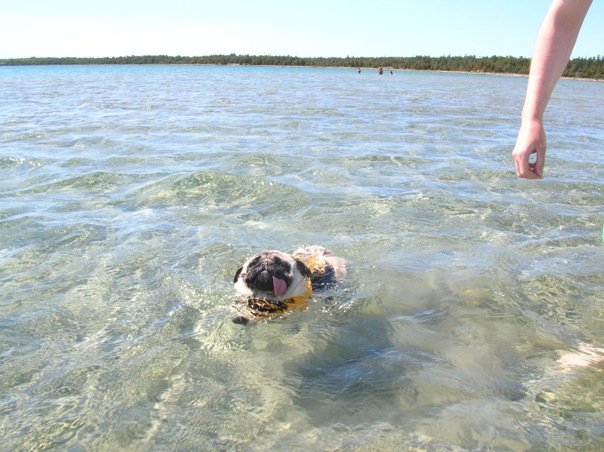
For the *person* I loved so much, my pug Tommie. 8.9.2001- 24.1.2015 Go snuggle some place nice!

5022_384286841654311_1515368800_nI imagine her comfortable in a little bed looking at me:

Do not stand at my grave and weep

Do not stand at my grave and weep
I am not there; I do not sleep.
I am a thousand winds that blow,
I am the diamond glints on snow,
I am the sunlight on ripened grain,
I am the gentle autumn rain.
When you awaken in the morning’s hush
I am the swift uplifting rush
Of quiet birds in circled flight.
I am the soft stars that shine at night.
Do not stand at my grave and cry,
I am not there; I did not die.

1410792_10201773201145672_1092475997_oAnd another one that reminds me of her pugginess and love of sun:

Wordsworth’ Daffodils

I wandered lonely as a cloud
That floats on high o’er vales and hills,
When all at once I saw a crowd,
A host, of golden daffodils;
Beside the lake, beneath the trees,
Fluttering and dancing in the breeze.

For oft, when on my couch I lie
In vacant or in pensive mood,
They flash upon that inward eye
Which is the bliss of solitude;
And then my heart with pleasure fills,
And dances with the daffodils.

And:

Remember me when I am gone away,
Gone far away into the silent land;
When you can no more hold me by the hand,
Nor I half turn to go yet turning stay.
Remember me when no more day by day
You tell me of our future that you plann’d:
Only remember me; you understand
It will be late to counsel then or pray.
Yet if you should forget me for a while
And afterwards remember, do not grieve:
For if the darkness and corruption leave
A vestige of the thoughts that once I had,
Better by far you should forget and smile
Than that you should remember and be sad.

Rossetti

202185_4239688264381_2083941327_o

And by Elizabeth Barrett Browning:

— I love thee with the breath,
Smiles, tears, of all my life; and, if God choose,
I shall but love thee better after death.

205103_1051554923040_7217_n

A sad poem:

IX.
Stop all the clocks, cut off the telephone,
Prevent the dog from barking with a juicy bone,
Silence the pianos and with muffled drum
Bring out the coffin, let the mourners come.

Let aeroplanes circle moaning overhead
Scribbling on the sky the message She Is Dead,
Put crêpe bows round the white necks of the public doves,
Let the traffic policemen wear black cotton gloves.

She was my North, my South, my East and West,
My working week and Sunday rest,
My noon, my midnight, my talk, my song;
I thought that love would last forever: I was wrong.

The stars are not wanted now: put out every one;
Pack up the moon and dismantle the sun;
Pour away the ocean and sweep up the wood;
For nothing now can ever come to any good

WH Auden

294590_2270775282787_1792519193_n

Fat piglets: Tommie and her brothers…

Adlestrop (This poem accompanies Pugs in the sun Everywhere)

BY EDWARD THOMAS

Yes. I remember Adlestrop—
The name, because one afternoon
Of heat the express-train drew up there
Unwontedly. It was late June.
The steam hissed. Someone cleared her throat.
No one left and no one came
On the bare platform. What I saw
Was Adlestrop—only the name
And willows, willow-herb, and grass,
And meadowsweet, and haycocks dry,
No whit less still and lonely fair
Than the high cloudlets in the sky.
And for that minute a blackbird sang
Close by, and round him, mistier,
Farther and farther, all the birds
Of Oxfordshire and Gloucestershire.


Snuggle close, sleep deep, snore loud, Tommie.
And find a place where I can smell and see you easily. Oh, Tommeleh, Moon face, Dogalopoulous, Pugminion, Pug-befje, Mopsehondicus… Champignon neus… the Tongue… Your eye lashes were so cute too.


Najam Hosain Syed: Night a Burning Oven. Muslim poetry about desire and the body!

Night a Burning Oven

Throw your hand in and place the dough
Many were cooked over flat pans
Eyes were singed lighting damp wood
Now wear the coal of this heat in your eyes
Raise your arms and dance in it
Red wheat has sprouted during the course of time Night a burning oven
Throw your hand in and place the dough
Lay your virtues on the table
Serve yourself and feed yourself
Who knows when the day will rise, how it will rise
Whoever beheld the daybreak
Will not return to tell

Translated by Zubair Ahmad and Fauzia Rafiq

Click to access 13.1.2_Ahmad.pdf

USED: http://www.abebooks.com/servlet/BookDetailsPL?bi=8962523344

http://www.mptmagazine.com/author/najm-hosain-syed-5469/
“Najm Hosain Syed is the most significant Punjabi writer of post-Partition West Punjabi literature. He was born in 1936 in Batala eastern Punjab. After Partition in 1947, his family had to move to Lahore in Pakistan. He did his masters in English literature from Punjab University and joined Pakistan civil service and retired as Accountant General of Punjab.

He founded the Punjabi Sangat -literary study group- and the Majlis Shah Hussain -a publishing venture- in the early 1970s. During the time he also headed the post-graduate Department of Punjabi in Punjab University. He has authored more than 30 books of poetry, plays and creative non-fiction. “

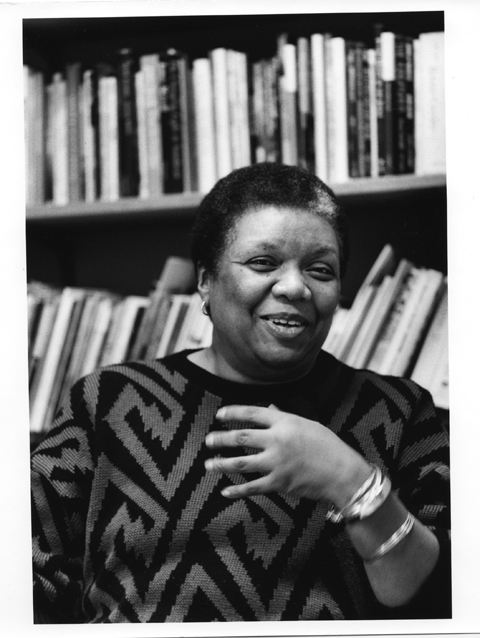
KOKUMỌ: Lucille Clifton. Grandsons!!

CLIFTON_resized

KOKUMỌ

Photographs, my grandsons spinning in their joy.

universe
keep them turning —turning
black blurs against the window
of the world
for they are beautiful
and there is trouble coming
round and round and round

Lucille Clifton
In: the Oxford Anthology of African-American Poetry.
Ed. Arnold Rampersad; Associate Ed. Hilary Herbold.


BUY the book:

USED: http://www.abebooks.com/servlet/SearchResults?sts=t&tn=oxford+anthology+of+african-american+poetry
NEW from a local bookstore: http://www.indiebound.org/book/9780195125634

James Weldon Johnson- Black Mammy

Beautiful poem on why care-takers deserve to become permanent residents in Canada (Filipina, Caribbean). Fill in the arguments. By James Weldon Johnson, African-American poet.

THE BLACK MAMMY

O whitened head entwined in turban gay,
O kind black face, O crude, but tender hand,
O foster-mother in whose arms there lay
The race whose sons are masters of the land!
It was thine arms that sheltered in their fold,
It was thine eyes that followed through the length
Of infant days these sons. In times of old
It was thy breast that nourished them to strength.

So often hast thou to thy bosom pressed
The golden head, the face and brow of snow;
So often has it ‘gainst thy broad, dark breast
Lain, set off like a quickened cameo.
Thou simple soul, as cuddling down that babe
With thy sweet croon, so plaintive and so wild,
Came ne’er the thought to thee, swift like a stab,
That it some day might crush thine own black child?

from Fifty Years & Other Poems (1917)


MY CITY- J.W. Johnson

When I come down to sleep death’s endless night,
The threshold of the unknown dark to cross,
What to me then will be the keenest loss,
When this bright world blurs on my fading sight?
Will it be that no more I shall see the trees
Or smell the flowers or hear the singing birds
Or watch the flashing streams or patient herds?
No, I am sure it will be none of these.

But, ah! Manhattan’s sights and sounds, her smells,
Her crowds, her throbbing force, the thrill that comes
From being of her a part, her subtle spells,
Her shining towers, her avenues, her slums–
O God! the stark, unutterable pity,
To be dead, and never again behold my city!

Rita Dove: Fifth Grade Autobiography!

Love love love this poem. Hilarious, touching. but I remember his hands.

Fifth Grade Autobiography

BY RITA DOVE

I was four in this photograph fishing
with my grandparents at a lake in Michigan.
My brother squats in poison ivy.
His Davy Crockett cap
sits squared on his head so the raccoon tail
flounces down the back of his sailor suit.
My grandfather sits to the far right
in a folding chair,
and I know his left hand is on
the tobacco in his pants pocket
because I used to wrap it for him
every Christmas. Grandmother’s hips
bulge from the brush, she’s leaning
into the ice chest, sun through the trees
printing her dress with soft
luminous paws.
I am staring jealously at my brother;
the day before he rode his first horse, alone.
I was strapped in a basket
behind my grandfather.
He smelled of lemons. He’s died—
but I remember his hands.
.
.

Have You Got a Brook in your Little Heart.

Image

Image


Beautiful.

Have You Got a Brook in your Little Heart.

Have you got a brook in your little heart,
Where bashful flowers blow,
And blushing birds go down to drink,
And shadows tremble so?

And nobody knows, so still it flows,
That any brook is there;
And yet your little draught of life
Is daily drunken there.

Then look out for the little brook in March,
When the rivers overflow,
And the snows come hurrying from the hills,
And the bridges often go.

And later, in August it may be,
When the meadows parching lie,
Beware, lest this little brook of life
Some burning noon go dry.

Emily Dickinson.

Black History- Poems about The Body. Calvin Forbes, “Picture of a Man”

Image

Poems about The Body. Calvin Forbes, Black poet- “Picture of a Man”

He draws a man,
bright swirls of red.
And I say give me a tree.
He points to the middle
of his red and says
“there’s a tree!”
Tonight without complaining
he goes off to sleep
asking why in his story book
the big boats have little
boats. He shouts
goodnight: I ask if he wants
the lights out-

he says no, that he can’t see
without the light.
A different excuse than
last night when he was plain scared.
Later I turn off the light-
his face soft as a breast.
And I know then what another man
meant when he said
maybe I could have loved
better
but couldn’t have loved more.
I thought of a woman like that once.
This child is all I have left…

—–

BUY:
USED: http://www.abebooks.com/servlet/SearchResults?an=calvin+forbes&kn=poetry&sts=t
NEW: http://www.indiebound.org/book/9780807126660

http://www.poetryfoundation.org/bio/calvin-forbes

“Calvin Forbes teaches writing, literature, and jazz history at the School of the Art Institute in Chicago. Blues and jazz inform both the rhythm and content of his poetry. He often uses ballads to tell family stories or the ups and downs of romance. But Forbes updates the tradition with surreal techniques, epigrammatic humor, and changing voices. He described his work as “simplicity shacked up with complexity.” His first book, Blue Monday, appeared in 1974 and his most recent, The Shine Poems, a book that resurrects the African-American folk character, was issued in 2001.”Image

When you have forgotten Sunday. Gwendolyn Brooks.

—And when you have forgotten the bright bedclothes on a Wednesday and a Saturday,
And most especially when you have forgotten Sunday—
When you have forgotten Sunday halves in bed,
Or me sitting on the front-room radiator in the limping afternoon
Looking off down the long street
To nowhere,
Hugged by my plain old wrapper of no-expectation
And nothing-I-have-to-do and I’m-happy-why?
And if-Monday-never-had-to-come—
When you have forgotten that, I say,
And how you swore, if somebody beeped the bell,
And how my heart played hopscotch if the telephone rang;
And how we finally went in to Sunday dinner,
That is to say, went across the front room floor to the ink-spotted table in the southwest corner
To Sunday dinner, which was always chicken and noodles
Or chicken and rice
And salad and rye bread and tea
And chocolate chip cookies—
I say, when you have forgotten that,
When you have forgotten my little presentiment
That the war would be over before they got to you;
And how we finally undressed and whipped out the light and flowed into bed,
And lay loose-limbed for a moment in the week-end
Bright bedclothes,
Then gently folded into each other—
When you have, I say, forgotten all that,
Then you may tell,
Then I may believe
You have forgotten me well.

Nikki Giovanni ”The Butterfly- hat tip Kim Crosby.

Image

“those things
which yo so laughingly call
hands are in fact two
brown butterflies fluttering
across the pleasure
they give my body”

.
— Nikki Giovanni ”The Butterfly


.

.

NEW and USED: http://www.abebooks.com/servlet/SearchResults?an=nikki+giovanni&sts=t

http://kimkatrincrosby.squarespace.com

Annie M.G. Schmidt “Suja Suja Prikkeltje”

I loosely translated a Dutch baby’s sleeping song by the poet Annie M.G. Schmidt. ‘suja’ comes from ‘soothe’.

Suja suja prickly-ball, outside the moon bathes all in silver white,

You are a little porcupine, but don’t be sad: you are alright,

You are an itty-bitty porcupine, ignore the stereotypes,

The lions have their manes and tigers have their stripes

We have our auntie squirrel with a reddish woollen tail,

And you, you’re more than awesome with all those little quills!

Sleep, my itty-bitty prickle-ball, so you will grow big and fat,

So you’ll turn into a porcupine ‘xactly like mom and dad.

The stately elephant has a trunk, the bears, oooh, they have sharp claws,

The parrot has bright feathers, green ones, and think of royal blue macaws!

Our uncle giraffe, well, he has the longest neck; brown spots on golden white,

And you, you have all those prickly quills: what, not too shabby, right!?

Suja suja prickle-dum-dee, the moon is lit and the shadows are long.

You’re mine, the most beautiful porcupine, and also very strong!

The cats have whiskers and purring weave your dreams,

Sweet cows have horns and fish they dance in streams,

Our cousin the otter has a jacket, velvet, soft-brown and gray,

and you, you have all those tickly quills: those will come in handy one day!

http://www.youtube.com/watch?v=m-x5QH-jCi4

Image

Suja suja Prikkeltje, daar buiten schijnt de maan,

je bent een stekelvarkentje, maar trek het je niet aan,

je bent een stekelvarkentje, dat heb je al begrepen,

De leeuwen hebben manen en de tijgers hebben strepen

en onze tante eekhoorn heeft een roje wollen staart,

maar jij hebt allemaal stekeltjes en dát is zoveel waard.

Slaap, mijn kleine Prikkeltje, dan wordt je groot en dik,

dan wordt je net zo’n stekelvarken als je pa en ik.

Het olifantje heeft een slurf, de beren hebben klauwen,

de papegaai heeft veren, van die groene, van die blauwe,

en onze oom giraffe heeft een héle lange nek,

maar jij hebt allemaal stekeltjes en dat is ook niet gek,

Suja suja Prikkeltje, het is al vreselijk laat,

Je bent het mooiste stekelvarken, dat er maar bestaat,

de poezen hebben snorren en daar kunnen ze door spinnen,

de koeien hebben horens en de vissen hebben vinnen,

en onze neef, de otter, heeft een bruinfluwelen jas,

maar jij hebt allemaal stekeltjes, die komen nog te pas.