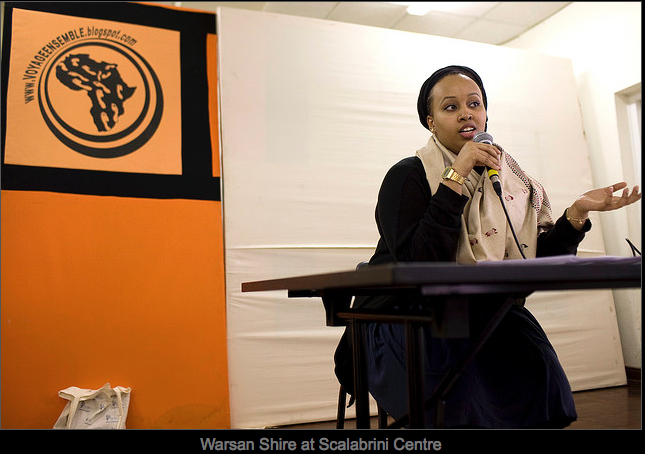
When You Love What Do You Love? ¿Qué se ama cuando se ama? Gonzales Rojas. #Valentines #poetryisjustawesome

When You Love What Do You Love?

When you love what do you love, my God: terrible light of life
or death’s delight? What do you look for, what uncover, what
is it: love? And who? Woman with her depths, her roses, her volcanoes,
or this flushed sun, my furious blood
as I enter into her last roots?

Or is it all a great game, God, with no woman
or man but just one body: yours,
shared out in beauty-stars, in brief grains
of visible eternity?

It kills me, oh God, this war
of going and coming among them in the streets, unable to love
three hundred at a time, condemned as I am to one,
this one, this one alone, you gave me in that old paradise.


¿Qué se ama cuando se ama?

¿Qué se ama cuando se ama, mi Dios: la luz terrible de la vida
o la luz de la muerte? ¿Qué se busca, qué se halla, qué
es eso: amor? ¿Quién es? ¿La mujer con su hondura, sus rosas, sus volcanes,
o este sol colorado que es mi sangre furiosa
cuando entro en ella hasta las últimas raíces?

¿O todo es un gran juego, Dios mío, y no hay mujer
ni hay hombre sino un solo cuerpo: el tuyo,
repartido en estrellas de hermosura, en particular fugaces
de eternidad visible?

Me muero en esto, oh Dios, en esta guerra
de ir y venir entre ellas por las calles, de no poder amar
trescientas a la vez, porque estoy condenado siempre a una,
a esa una, a esa única que me diste en el viejo paraíso.

De Contra la muerte, 1964.

From: Pinholes in the Night, essential poems for Latin America. Selected by Raul Zurita, edited by Forrest Gander.

USED and NEW: Pinholes in the Night at Abebooks.com.
Out of longing, Dvorah Fogel- Yiddish poetry! “…Every night something should happen in the world…”

Favourite stanza because the thought:

Every night something should happen in the world.
Something should come
of all the walks
One takes in a day.


Out of longing

Today I bought yellow cherries
smelling wetly of loneliness.

Cherries never grow old.
Just sixteen, seventeen years old.

Today I’m a yellow cherry,
I taste emptily of drifting
through night streets, city streets.
Yellow lamps.

Every night something should happen in the world.
Something should come
of all the walks
One takes in a day.

But last year
and again two and three years ago

Only the watery taste
of loneliness.

Dvorah Fogel.


From: a Treasury of Yiddish Poetry edited by Irving Howe and Liezer Greenberg.
USED and NEW: http://www.abebooks.com/servlet/BookDetailsPL?bi=13535919967

http://jwa.org/encyclopedia/article/fogel-dvoyre

“Together with her husband and son, Fogel was killed in the Lwów ghetto in 1942.

Fogel’s remarkable experimental poetry, all written in the 1930s, was, in the spirit of early twentieth-century art, radically avant-garde and attuned to all the modernist minimalisms.

She attempted to fuse modern art and poetry in a new style that she termed “white words,” striving, as she put it, to create a new lyric poetry of the urban condition: a poetry of cool stasis and of geometric ornamentation with a rhythm of repetition that can replace melodiousness and dynamism, in which monotone becomes theme.

In her creative prose she employed repetitive detached impressions (“montages”) to achieve the same goals.

Contemporaneous and later critics considered her style too intellectual, studied and obscure, and lacking in traditional Jewish and feminine thematics.

Yet Fogel herself regarded her project not as a deliberate experiment, but rather as “a necessity, achieved and paid for with life’s experience.

Act Six, After Babel by Peter Goldsworthy. Poems about theatre and sex- Australia.

Act Six

Act six begins
when the curtain falls,
the corpses awake,
the daggers are cleaned.

Act six
is Juliet in the supermarket,
Mr Macbeth on the 8.15.

In act six
Hamlet sucks a tranquilliser,
Romeo washes up.

and death
is gentle and anonymous —
Lear’s respirator
switched discreetly off.

After Babel

I read once of a valley
where men and women
spoke a different tongue.

I know that any uncooked theory
can find its tribe
— but this one might be true.

For us there are three languages
— yours, mine, and the English between,
a wall of noises.

At times our children interpret,
or music connects our moods.
There are monosyllables,

the deeper grammar of fucking,
a language too subjective
for nouns.

But even after conjugation
the tense is still the same
— present imperfect.

We take our mouths from each other.
We carry away our tongues,
and the separate dictionaries of our heads.

.


The New Oxford Book of Australian Verse, chosen by Les A. Murray
USED: http://www.abebooks.com/servlet/BookDetailsPL?bi=14144434264

Rosa Gutman Jasny: The Faraway Moon. Yiddish poetry!

Because sometimes you can’t get a woman out of your mind. Not even by watching Buffy. Or The Good Wife. This poem especially the last line, shows so much tenderness and knowing…

Rosa Gutman Jasny “produced much of their work in Eastern Europe […] also found their way to New York at various stages in their lives. The lives of several women writers were spent in a perpetual state of wandering…”
http://jwa.org/encyclopedia/article/yiddish-womens-poetry

The Faraway Moon

The faraway moon, has she already heard
That any minute now
She’s to become a world by herself?
No longer lotus flower, tender and bemused —
Just an ordinary drab world.

Today she shows us half her face,
drawn and pale.
That blond capricious moon —
What might she not do from rage?

Turn swiftly to her lords on high,
And scatter all dreams since time began,
Like dust into outer space?

Oh no, moon, don’t.

.

Poem by Rosa Gutman Jasny and translated from Yiddish to English by Etta Blum.

Treasury of Yiddish Poetry. Edited by Irving Howe, Eliezer Greenberg.

USED and NEW: http://www.abebooks.com/servlet/BookDetailsPL?bi=13535919967

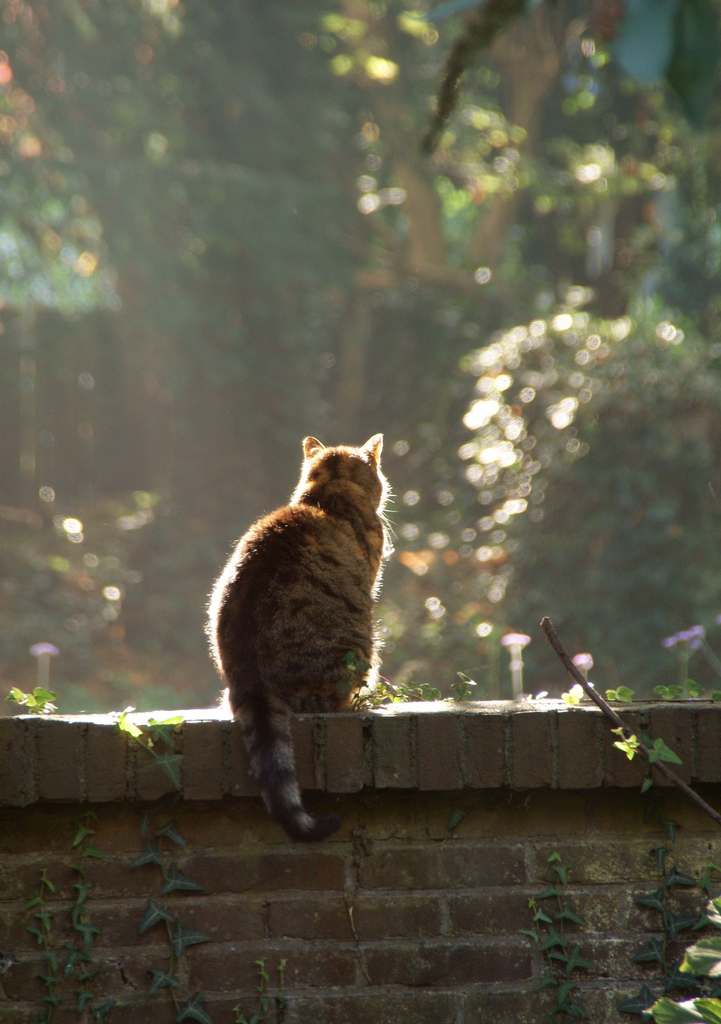
Swiss-Italian poetry by Alberto Nessi and Giorgio Orelli. Cat and pouring rains!

2892421591_25389d1ecb_b

Photo: Lambert Wolterbeek Muller, Utrecht, the Netherlands.

Italian poetry by Alberto Nessi and Giorgio Orelli. Peta italiano

Two poems for the cat by Alberto Nessi.

The Disappearance

Little is left from her life: the the wall boards
scratched by her claws, her ghost that visits us
every night when we think we spot her in the geraniums, the stories
of her adventures among the cacti
pirouetting, pouncing, dancing with the flies
the rivalry with the other cats we’d shoo away
as if she was of a higher feline race
and not a just a gentle moggie. Only traces and ghosts
of life remain
A cat like her
someone has poisoned her on purpose
or some peasant skinned and ate her —
but what if she ran away from home, a young girl looking for love
and what if we saw her again tomorrow, standing still
in the middle of the patio
protecting our equally precarious lives?

[…cat returns…]

“due poesie per la gatta La scomparsa della sua vita è rimasto poco: il pannello di pavatex graffiato dalle…”

In autumn by Giorgio Orelli.

Catlike in the salamander’s
slimy yellow
between the hedge and the tarmac: I didn’t even
see the face of the boy who
almost ran over me at the bend with his bike.
The rain was hosing down sideways
so much that it darkened the mood of the cows
near the high school:
in groups, dazed,
they forsook the grass,
and lowed miserably at the sky.

(Outlines, 1989)

D’autunno

Felinamente in giallo
viscido di salamandra
tra siepe e asfalto: neanche la faccia
gli ho visto al ragazzo che in bici
quasi m’investe allo svolto.
Tanto fitto pioveva e di traverso
che alle vacche vicino al liceo
l’anima s’annegrava:
in gruppo, stralunate,
disprezzavano l’erba,
mute muggivano al cielo.

(Spiracoli, 1989)

“Poetry Editor’s note: Contrappasso bids a sad farewell to Giorgio Orelli, who passed away […] at the age of 92. Below are the five poems of Orelli’s that appeared in Issue 3, translated by Marco Sonzogni.”

Camomile Tea: Katherine Mansfield!

katherine_mansfield NPG P1009; Katherine Mansfield by John Herbert Folker

(l) Katherine Mansfield, Menton, France. 1921. Ref: PAColl-6826-1-15-1. Source: Alexander Turnbull Library, Wellington, New Zealand Website: http://beta.natlib.govt.nz/records/23146336

(r) Katherine Mansfield, by John Herbert Folker, 1917 – NPG P1009 – © National Portrait Gallery

Outside the sky is light with stars; 
There's a hollow roaring from the sea.
 
And, alas! for the little almond flowers, 
The wind is shaking the almond tree.
 

How little I thought, a year ago, 
In the horrible cottage upon the Lee 
That he and I should be sitting so 
And sipping a cup of camomile tea.
 

Light as feathers the witches fly, 
The horn of the moon is plain to see; 
By a firefly under a jonquil flower 
A goblin toasts a bumble-bee.
 

We might be fifty, we might be five, 
So snug, so compact, so wise are we! 
Under the kitchen-table leg 
My knee is pressing against his knee.
 

Our shutters are shut, the fire is low, 
The tap is dripping peacefully; 
The saucepan shadows on the wall 
Are black and round and plain to see.

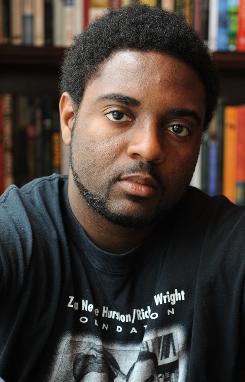
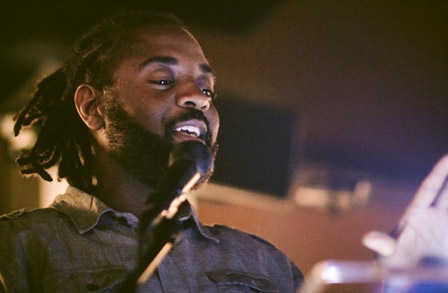
For the love of words. And the freedom to love.

bettsxr-dwayne-betts

Photo by H. Darr Beiser. Photo by Rachel Eliza Griffiths!

About his being locked up as an “adult” as a 16 year old in a men’s prison.

dwayne-betts

Photo by Gesi Schilling.

“For you: anthophilous, lover of flowers”

BY REGINALD DWAYNE BETTS

.
For you: anthophilous, lover of flowers,
green roses, chrysanthemums, lilies: retrophilia,
philocaly, philomath, sarcophilous—all this love,
of the past, of beauty, of knowledge, of flesh; this is
catalogue & counter: philalethist, negrophile, neophile.
A negro man walks down the street, taps Newport
out against a brick wall & stares at you. Love
that: lygophilia, lithophilous. Be amongst stones,
amongst darkness. We are glass house. Philopornist,
philotechnical. Why not worship the demimonde?
Love that—a corner room, whatever is not there,
all the clutter you keep secret. Palaeophile,
ornithophilous: you, antiquarian, pollinated by birds.
All this a way to dream green rose petals on the bed you love;
petrophilous, stigmatophilia: live near rocks, tattoo hurt;
for you topophilia: what place do you love? All these words
for love (for you), all these ways to say believe
in symphily, to say let us live near each other.
.
.
About his being locked up as an “adult” as a 16 year old in a men’s prison.
.
.
Tax cuts mean less time to read, fewer hours of access per month in the prison library- no they can’t go every day. Please.
Your tax cuts take humanity away from other persons.
.
Your tax cuts mean no time for therapy, no time to prepare for the living world, no time to better yourself, no strength to stay away, no better neighbourhood to return to, no vote. No voice.
.
And yes, everyone deserves to be heard, even if you sold coke or weed (that’s what the majority of black men are in prison for) or killed someone or defrauded thousands of people or paid your employees too little. They are people.
.
You have done wrong. Everybody has skeletons. If you’ve done your time, you should be given all your rights back.
.
Anyway.

Lesbian Tenderness Alive Alive!

Fantasy

Gwendolyn Bennett
I sailed in my dreams to the Land of Night
Where you were the dusk-eyed queen,
And there in the pallor of moon-veiled light
The loveliest things were seen ...

A slim-necked peacock sauntered there
In a garden of lavender hues,
And you were strange with your purple hair
As you sat in your amethyst chair
With your feet in your hyacinth shoes.

Oh, the moon gave a bluish light
Through the trees in the land of dreams and night.
I stood behind a bush of yellow-green
And whistled a song to the dark-haired queen ...


Established in 1970, Glad Day Bookshop is the world’s oldest LGBTQ bookstore and Toronto’s oldest surviving bookstore. In 2012, a group of 23 community members pooled their funds and bought Glad Day Bookshop to save it from closing.

“Our best strategy for survival is adding new revenues streams like food and drink – which means a larger space.
We’ve picked out a great spot on Church Street that would allow us to be a bookstore & coffee shop during the day and a bar at night.
It is wheelchair accessible, with an accessible washroom.

It has a cute patio, a small space for performances and walls for art.

We will be a space where everyone feels welcome, sexy and celebrated.

We will be a queer-owned, indie place on Church Street. We will amplify the love, creativity, sexuality, diversity & liberation that Glad Day Bookshop is known for.”

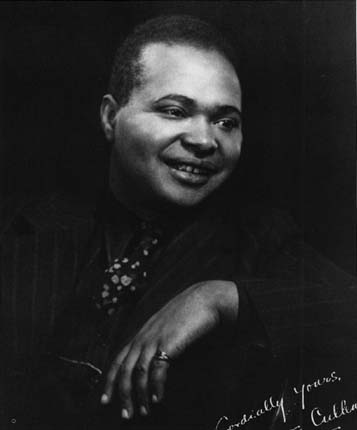
Countee Cullen: for my grandmother

cuc0003 allen_cullen

Countee Cullen, black poet.

For my grandmother

This lovely flower fell to seed;
Work gently sun and rain;
She held it as her dying creed
That she would grow again.

index

NYer, born in 1903, raised a strict methodist and turned pagan. NY university, Harvard. Published works “Color”, “The Ballad of the Brown Girl” and “Copper Sun”.

His greatest wish was to be read as a poet, not to be judged on the brown colour of his skin. I am pointing out they are black, because otherwise most people assume Countee Cullen was white. And everyone needs bright, shining examples, especially when their bodies are walked over, shot, fetishized, taken, used to scare and control and whitewashed and hidden– on a daily basis.

From the Dark Tower.

We shall not always plant while others reap
The golden increment of bursting fruit,
Not always countenance, abject and mute
That lesser men should hold their brothers cheap;
Not everlastingly while others sleep
Shall we beguile their limbs with mellow flute,
Not always bend to some more subtle brute;
We were not made eternally to weep.

The night whose sable breast relieves the stark
White stars is no less lovely being dark,
And there are buds that cannot bloom at all
In light, but crumple, piteous, and fall;
So in the dark we hide the heart that bleeds,
And wait, and tend our agonizing seeds.

Words can never hurt. Unless you hear them again and again.
The incident.

Once riding in old Baltimore,
Heart-filled, head-filled with glee,
I saw a Baltimorean
Keep looking straight at me.

Now I was eight and very small,
And he was no whit bigger,
And so I smiled, but he poked out
His tongue, and called me, ‘Nigger.’

I saw the whole of Baltimore
From May until December;
Of all the things that happened there
That’s all that I remember.

CullenYoungnPretty


From Caroling Dusk. See http://www.abebooks.com for your own copy!!

Helene Johnson- Bottled

woman-with-book-jpg

Bottled

Upstairs on the third floor
Of the 135th Street Library
In Harlem, I saw a little
Bottle of sand, brown sand,
Just like the kids make pies
Out of down on the beach.
But the label said: “This
Sand was taken from the Sahara desert.”
Imagine that! The Sahara desert!
Some bozo’s been all the way to Africa to get some sand.
And yesterday on Seventh Avenue
I saw a darky dressed to kill
In yellow gloves and swallowtail coat
And swirling at him. Me too,
At first, till I saw his face
When he stopped to hear a
Organ grinder grind out some jazz.
Boy! You should a seen that darky’s face!
It just shone. Gee, he was happy!
And he began to dance. No
Charleston or Black Bottom for him.
No sir. He danced just as dignified
And slow. No, not slow either.
Dignified and proud! You couldn’t
Call it slow, not with all the
Cuttin’ up he did. You would a died to see him.
The crowd kept yellin’ but he didn’t hear,
Just kept on dancin’ and twirlin’ that cane
And yellin’ out loud every once in a while.
I know the crowd thought he was coo-coo.
But say, I was where I could see his face,

And somehow, I could see him dancin’ in a jungle,
A real honest-to cripe jungle, and he wouldn’t leave on them
Trick clothes-those yaller shoes and yaller gloves
And swallowtail coat. He wouldn’t have on nothing.
And he wouldn’t be carrying no cane.
He’d be carrying a spear with a sharp fine point
Like the bayonets we had “over there.”
And the end of it would be dipped in some kind of
Hoo-doo poison. And he’d be dancin’ black and naked and      Gleaming.
And He’d have rings in his ears and on his nose
And bracelets and necklaces of elephants teeth.
Gee, I bet he’d be beautiful then all right.
No one would laugh at him then, I bet.
Say! That man that took that sand from the Sahara desert
And put it in a little bottle on a shelf in the library,
That’s what they done to this shine, ain’t it? Bottled him.
Trick shoes, trick coat, trick cane, trick everything-all glass-
But inside-
Gee, that poor shine!

http://voices.cla.umn.edu/artistpages/johnsonHelene.php That page was researched and submitted by Crystal EsparzaCaroline Klohs, and Camille Cyprian on 12/16/05.

“The man is described as similar to the bottle because both were stolen, labeled, and put on display.

… she takes the bold risk of writing in a negative tone embracing danger, impurity and shame.

She simply states the truths of oppression and racism and brings light to the negative labels and stereotypes perpetuated by mainstream culture.

Johnson’s decision to rejoice in the beauty of darkness was an extraordinary risk due to the racial and gender discrimination that was taking place at the time.”


Poem

Little brown boy,
Slim, dark, big-eyed,
Crooning love songs to your banjo
Down at the Lafayette–
Gee, boy, I love the way you hold your head,
High sort of and a bit to one side,
Like a prince, a jazz prince.   And I love
Your eyes flashing, and your hands,
And your patent-leathered feet,
And your shoulders jerking the jig-wa.
And I love your teeth flashing,
And the way your hair shines in the spotlight
Like it was the real stuff.
Gee, brown boy, I loves you all over.
I’m glad I’m a jig. I’m glad I can
Understand your dancin’ and your
Singin’, and feel all the happiness
And joy and don’t care in you.
Gee, boy, when you sing, I can close my ears
And hear tom-toms just as plain.
Listen to me, will you, what do I know
About tom-toms? But I like the word, sort of,
Don’t you? It belongs to us.
Gee, boy, I love the way you hold your head,
And the way you sing, and dance,
And everything.
Say, I think you’re wonderful.    You’re
Allright with me,
You are.


Robley Wilson Jr. The Opera- Love lost.

Image

Robley Wilson Jr.

The Opera

I regret the going back
to old places— the streets
that are made into freeways,
the plazas and airfields
named after great men who
were alive when we loved.

It is as if by stopping
our attentions to each other
we set something heartless
in motion— that you redid
the world, that I altered
its common names to hide you.

Now that you are lost to me,
I believe I never took you
to hear Rimsky-Korsakov—
you wearing your white dress
with the hot orange shapes
I called kisses-in-the-snow.

Have You Got a Brook in your Little Heart.

Image

Image


Beautiful.

Have You Got a Brook in your Little Heart.

Have you got a brook in your little heart,
Where bashful flowers blow,
And blushing birds go down to drink,
And shadows tremble so?

And nobody knows, so still it flows,
That any brook is there;
And yet your little draught of life
Is daily drunken there.

Then look out for the little brook in March,
When the rivers overflow,
And the snows come hurrying from the hills,
And the bridges often go.

And later, in August it may be,
When the meadows parching lie,
Beware, lest this little brook of life
Some burning noon go dry.

Emily Dickinson.

Black History: The World is Your Body. “Teaching My Mother to Give Birth” by Warsan Shire

Image


ImageImage

London’s first young poet laureate!!!

Teaching My Mother to Give Birth by Warsan Shire:

“later that night
i held an atlas in my lap
ran my fingers across the whole world
and whispered
where does it hurt?”

it answered
everywhere
everywhere
everywhere.”
― Warsan Shire

USED: http://www.abebooks.com/servlet/BookDetailsPL?bi=11212527987
NEW: http://www.indiebound.org/book/9781905233298

Black History- poems about your body. Lucille Clifton- lost baby

Image

Poems about Your Body.
Lucille Clifton, black poet- The Lost Baby Poem.

the time i dropped your almost body down
down to meet the waters under the city
and run one with the sewage to the sea
what did i know about waters rushing back
what did i know about drowning
or being drowned

you would have been born into winter
in the year of the disconnected gas
and no car—- we would have made the thin
walk over genesee hill into the canada wind
to watch you slip like ice into strangers’ hands
you would have fallen naked as snow into winter
if you were here i could tell you these
and some other things

if i am ever less than a mountain
for your definite brothers and sisters
let the rivers pour over my head
let the sea take me for a spiller
of seas —– let black men call me stranger
always —–for your never named sake