Unknown's avatar

About Frédéric.Arps.blogs

https://twitter.com/FreddieArps

Black History Month: Nikki-Rosa by Nikki Giovanni. Childhood.

Image

Nikki-Rosa by Nikki Giovanni

childhood remembrances are always a drag
if you’re Black
you always remember things like living in Woodlawn
with no inside toilet
and if you become famous or something
they never talk about how happy you were to have
your mother
all to yourself and
how good the water felt when you got your bath
from one of those
big tubs that folk in chicago barbecue in
and somehow when you talk about home
it never gets across how much you
understood their feelings
as the whole family attended meetings about Hollydale
and even though you remember
your biographers never understand
your father’s pain as he sells his stock
and another dream goes
And though you’re poor it isn’t poverty that
concerns you
and though they fought a lot
it isn’t your father’s drinking that makes any difference
but only that everybody is together and you
and your sister have happy birthdays and very good
Christmases
and I really hope no white person ever has cause
to write about me
because they never understand
Black love is Black wealth and they’ll
probably talk about my hard childhood
and never understand that
all the while I was quite happy

Black History Month. From Arnold Rampersad, the Oxford Anthology of African-American Poetry.


BUY the book:

USED: http://www.abebooks.com/servlet/SearchResults?sts=t&tn=oxford+anthology+of+african-american+poetry
NEW from a local bookstore: http://www.indiebound.org/book/9780195125634
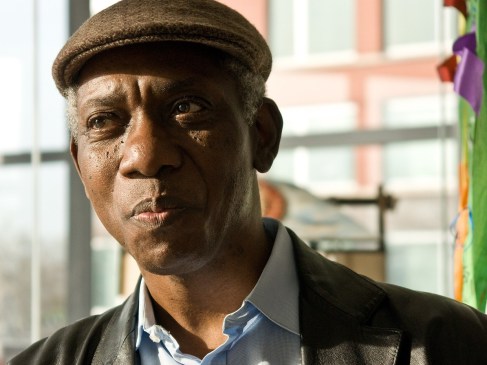
LITTLE MAN AROUND THE HOUSE, Yusef Komunyakaa. Black History Month- poetry.

Image
LITTLE MAN AROUND THE HOUSE
Mama Elsie’s ninety now.
She calls you whippersnapper.
When you two laugh, her rheumatism
Slips out the window like the burglar
She hears nightly. Three husbands
& an only son dead, she says
I’ll always be a daddy’s girl.
Sometimes I can’t get Papa’s face
Outta my head. But this boy, my great-
Great-grandson, he’s sugar in my coffee.
You look up from your toy
Telescope, with Satchmo’s eyes,
As if I’d put a horn to your lips.
You love maps of buried treasure,
Praying Mantis, & Public Enemy…
Blessed. For a moment I am jealous.
You sit like the king of trumpet
Between my grandmama & wife,
Youngblood, a Cheshire cat
Hoodooing two birds at once.

Silly funny poem about chocolate cats!

The Sugar-Plum Tree
by Eugene Field

 Have you ever heard of the Sugar-Plum Tree?
'T is a marvel of great renown!
It blooms on the shore of the Lollipop sea
In the garden of Shut-Eye Town;
The fruit that it bears is so wondrously sweet
(As those who have tasted it say)
That good little children have only to eat
Of that fruit to be happy next day. 
When you 've got to the tree, you would have a hard time
To capture the fruit which I sing;
The tree is so tall that no person could climb
To the boughs where the sugar-plums swing!
But up in that tree sits a chocolate cat,
And a gingerbread dog prowls below---
And this is the way you contrive to get at
Those sugar-plums tempting you so: 
You say but the word to that gingerbread dog
And he barks with such terrible zest
That the chocolate cat is at once all agog,
As her swelling proportions attest.
And the chocolate cat goes cavorting around
From this leafy limb unto that,
And the sugar-plums tumble, of course, to the ground---
Hurrah for that chocolate cat! 
There are marshmallows, gumdrops, and peppermint canes,
With stripings of scarlet or gold,
And you carry away of the treasure that rains
As much as your apron can hold!
So come, little child, cuddle closer to me
In your dainty white nightcap and gown,
And I 'll rock you away to that Sugar-Plum Tree
In the garden of Shut-Eye Town.

I know why the caged bird sings. Paul Dunbar and Maya Angelou.

Aside

paul_laurence_dunbar_1 600full-maya-angelou

I know why the caged bird sings”. A line by Paul Dunbar that inspired Maya Angelou.

Sympathy

by Paul Laurence Dunbar

I know what the caged bird feels, alas!
When the sun is bright on the upland slopes;
When the wind stirs soft through the springing grass,
And the river flows like a stream of glass;
When the first bird sings and the first bud opes,
And the faint perfume from its chalice steals—
I know what the caged bird feels!

I know why the caged bird beats his wing
Till its blood is red on the cruel bars;
For he must fly back to his perch and cling
When he fain would be on the bough a-swing;
And a pain still throbs in the old, old scars
And they pulse again with a keener sting—
I know why he beats his wing!

I know why the caged bird sings, ah me,
When his wing is bruised and his bosom sore,—
When he beats his bars and he would be free;
It is not a carol of joy or glee,
But a prayer that he sends from his heart’s deep core,
But a plea, that upward to Heaven he flings—
I know why the caged bird sings!

The above poem was published in Lyrics of the Hearthside by Dodd, Mead and Company in 1899.
~~
This is the poem that inspired Maya Angelou’s poem.

© Paul Laurence Dunbar. All rights reserved


The free bird leaps
on the back of the wind
and floats downstream
till the current ends
and dips his wings
in the orange sun rays
and dares to claim the sky.

But a bird that stalks
down his narrow cage
can seldom see through
his bars of rage
his wings are clipped and
his feet are tied
so he opens his throat to sing.

The caged bird sings
with fearful trill
of the things unknown
but longed for still
and his tune is heard
on the distant hill
for the caged bird
sings of freedom

The free bird thinks of another breeze
and the trade winds soft through the sighing trees
and the fat worms waiting on a dawn-bright lawn
and he names the sky his own.

But a caged bird stands on the grave of dreams
his shadow shouts on a nightmare scream
his wings are clipped and his feet are tied
so he opens his throat to sing

The caged bird sings
with a fearful trill
of things unknown
but longed for still
and his tune is heard
on the distant hill
for the caged bird
sings of freedom.

Maya Angelou

To sit quietly beside a friend

To sit quietly beside a friend

I would like to come to all my friends
– well, also those who are not my friends-
And ask: Love me the way I am
and don’t make demands. See I can’t
entertain you with lively chat, can’t be
quick-witted, witty nor share confidences
about myself or speak my deepest thoughts.
Should we so wear out ourselves – one for the other?

Let me sit next to you without words, quietly,
wrapped up in our own work, our own thoughts
Or- if you’d like to talk- do speak to me
I will listen– if you good-humouredly
with light chat would keep me company,
I will laugh at your banter and your drollery
I will watch you with an earnest face if loftily, or deeply
or idly you speak of much too serious a thing.

But when I sit quietly like this, and listen
to your words- or to the ticking of the clock-
Or, if I let the silence rustle around us,
-it does whisper so delightfully when folks are still-
When I feel glad to be around you,
then I would like to ask, and break the silence

or with my question interrupt our talk:
Say, are you glad also, that I sit here beside you
And if you say yes, then I will say me too.

And that would be all I wished to know
and all that you would need to know of me.

Jacqueline E. van der Waals

Ik zou tot al mijn vrienden willen gaan
-Ook wel tot hen,die niet mijn vrienden zijn-
En vragen:Heb mij lief,gelijk ik ben
En stel aan mij geen eischen.Zie ik kan
niet onderhoudend praten,niet gevat
Of geestig zijn,en niet vertrouwelijk
vertellen van mijzelf of van mijn ziel…..
Wat zouden we ons vermoeien voor elkaar?

Laat mij maar zwijgend naast U zitten.stil
Verdiept in eigen werk,eigen gedachten.
Of-als gij praten wilt-spreek gij tot mij.
k zal wel luisteren,als gij vriendelijk
Met lichten kout mij onderhouden wilt,
Wel lachen om de grappen.die ge zegt,
Wel ernstig kijken,als ge hoog, of diep,
Of ijdel praat van al te diepe dingen…..

Maar als ik dan zo zwijgend zit,en luister
Naar uw gesprek-of naar het klokgetik-
Of , k laat de stilte ruischen om ons heen,-
-Die ruischt zoo prettig,als de mensen zwijgen-
Als ‘ k mij dan blij in uw nabijheid voel,
Dan zou ik willen vragen, en de stilte

-Of ons gesprek-verbreken met mijn vraag:
,,Zeg. zijt ge ook blij,dat ik hier naast u zit?”
Spraakt gij dan,,Ja”, dan zei ik zacht: Ik ook”

En dat was alles,wat ik weten wou
En al, wat gij van mij behoeft te weten.

Urban Haikus II

The birds have arrived
The birdfeeder is empty
Squirrel runs away

A cat named Panda
Cute, but don’t let that fool you –
He killed a squirrel!

— Talib

house across the street
silent and empty-
bank owns it

red leaves fluttering
skittering across the lawn-
broken toys 

Michael Pruchnicki


Jasmine scent lingers –
Although not in a garden
But a moving train

–Talib

The Harsh Morning Headache,
The Sweet Smell Of Summer Air,
Stop drinking and smoking man, it’ll kill you.

Krystian Szastok


urban haikus!

Freeway overpass–
Blossoms in graffiti on
fog-wrapped June mornings

M.R. Collins

The morning paper
harbinger of good and ill
— I step over it

D. McCroskey

They’ve gone…
Where the beach umbrella was
the sand not quite so hot

Dhugal Lindsay

Quiet around the point; ducks;
up down birches
helicopter

Thomas Grieg

The summer river;
Although there is a bridge, my horse
goes through the water

Shiki Masaoka

ONE FOR ALL NEWBORNS By Thylias Moss

ONE FOR ALL NEWBORNS
By Thylias Moss

They kick and flail like crabs on their backs.
Parents outside the nursery window do not believe
they might raise assassins or thieves, at the very worst.
a poet or obscure jazz Musician whose politics
spill loudly from his horn.
Everything about it was wonderful, the method
of conception, the gestation, the womb opening
in perfect analogy to the mind’s expansion.

[…]

Thylias Moss: God and Church and beautiful, laughing speech!!

Woohoo!

‘Contemporary Black American poets’ came in the post.
From New Orleans Public Library- Algiers Point. They got it in 1995.

Here is one funny piece of a poem from Thylias Moss.
((TRIGGER warning-sexual assault/rape.))

Moss had “beautiful, laughing speech” – like Yeats said of Blake’s says Harold Bloom.

“Doubts during Catastrophe.”

“No better time to recall God’s fascination
with his image. He put something of himself
in every creation. When he was tired
he made lazy idiots. When he had hiccups
he made tumbleweeds. When he needed a twin
he made Adam. And whenever he needed to
he watched Adam seduce Eve. And when once Eve refused
God’s eyebrows raised , merged and flew off, a caracara
seeking carrion. And then there was wrath. ‘Vengeance
is mine’ he said. And then there was his seduction
of Mary who had to submit, could not disobey the Lord.”

Harold Bloom comments:

“”Here the black congregation exemplifies the saddest truth that this poetic visionary intuits about her people’s intense resort to faith:

“Our shouting, our jubilation scares the ominous into
crouching behind our ribs where it intercepts what
would best serve us if it reached our hearts.”

That is so bleak an intimation that only masterly language saves it from being unbearable as a truth.””


Moon in virgo- James Lee Jobe

You are not beaten. The simple music rises up,

children's voices in the air, sound floating out

across the land and on to the river beyond,

over the valley's floor. No, you cannot go back

for those things you lost, the parts of yourself

that were taken, often by force. Like an animal

in the forest you must weep it all away at once,

violently, and then simply live on. The music here

is Bach, Vivaldi; a chorale of children, a piano,

a violin. Together, they have a certain spirit

that is light, that lets in light, joyful, ecstatic.

"Forgive," said The Christ, and why not? Every day

that you still breathe has all the joy

and murderous possibilities of your bravest dream.

Forgive. Breathe. Live. The moon has entered Virgo,

the wind shifts, blows up from the Delta, cools this valley,

and you are not beaten; the children sing, it is Bach,

and you are brave, alive, and human.


Richard the pheasant– James Lee Jobe!

Poem about a pheasant!

For 5 cold mornings in a row, the beautiful pheasant

has come to our patio to steal some of the dry catfood,

sometimes right in front of my cat.

The house is still, and I enjoy the Sunday newspaper

with strong, dark coffee; the smell of it dances

around in the early darkness.

Driving to church there is bright, eager sunshine,

and the shadows of bare winter oaks stripe the lane

like a zebra; shadow, light, shadow.

At church I pray for my favorite aunt, Anna, her clock

seems to be quickly winding down, dear lady, widow

of my favorite uncle, Richard; mostly I just pray

that she finds her center.

The pheasant is a male, strikingly colored,

so beautiful, in fact, that I’ve begun to scatter extra catfood

to draw him back; we have become his grocery store.

I tell my wife that if he comes a 6th day, I’ll give him a name,

Richard; but he never comes again.

James Lee Jobe

Federico García Lorca– Romance Sonambulo.

Those beautiful. Tuna cloud, trembling, tambourines… I think part of the poem is about drowning and loneliness, but he writes about it so that you feel there is much going on around that place, in the water, at the water, the trees and mountains are the same area.

Temblaban en los tejados
farolillos de hojalata.
Mil panderos de cristal
herían la madrugada.

Tin bell vines
were trembling on the roofs.
A thousand crystal tambourines
struck at the dawn light.

Federico García Lorca— Romance Sonambulo

Different translation by Nimms:

Over the roofs, a shimmer
like little tin lamps, and glassy
tambourines by the thousand
slitting the glitter of dawn.

Dejadme subir al menos
hasta las altas barandas;
¡dejadme subir!, dejadme,
hasta las verdes barandas.
Barandales de la luna
por donde retumba el agua.

–At least let me climb up,
up to the high balconies;
Let me climb up! Let me,
up to the green balconies.
Railings of the moon
through which the water crashes.

Verde que te quiero verde.
Grandes estrellas de escarcha
vienen con el pez de sombra
que abre el camino del alba.
La higuera frota su viento
con la lija de sus ramas,
y el monte, gato garduño,
eriza sus pitas agrias.
¿Pero quién vendra? ¿Y por dónde…?
Ella sigue en su baranda,
Verde came, pelo verde,
soñando en la mar amarga.

Green, how I desire you, green.
Big stars of frosted vapors
come with the fish of the shadows
that opens the path of daybreak.
The fig tree fondles its wind
with the sandpaper of its branches,
and the forest, cunning cat,
bristles its acrid thorns.
But who will come? And from where?
She remains on her veranda
green flesh, a green coat,
dreaming in the bitter sea.

Scott Horton translated that part.

Completely different translation by John Frederick Nims:

Green it’s your green I love.
The stars are frost, enormous;
a tuna cloud floats over
nosing off to the dawn.
The fig tree catches a wind
to grate in its emery branches;
the mountain’s a wildcat, sly,
bristling its acrid cactus.
But – who’s on the road? Which way?
She’s dreaming there on her terrace,
green of her cheek, green hair,
she dreams of the bitter sea.

Charles Bukowski- The Night I Was Going To Die.

The Night I Was Going To Die

Written by: Charles Bukowski

 
 the night I was going to die
I was sweating on the bed
and I could hear the crickets 
and there was a cat fight outside
and I could feel my soul dropping down through the 
mattress
and just before it hit the floor I jumped up
I was almost too weak to walk
but I walked around and turned on all the lights
and then I went back to bed
and dropped it down again and
I was up
turning on all the lights
I had a 7-year-old daughter
and I felt sure she wouldn't want me dead
otherwise it wouldn't have
mattered
but all that night
nobody phoned
nobody came by with a beer
my girlfriend didn't phone
all I could hear were the crickets and it was
hot
and I kept working at it
getting up and down
until the first of the sun came through the window
through the bushes
and then I got on the bed
and the soul stayed
inside at last and
I slept.
now people come by
beating on the doors and windows
the phone rings
the phone rings again and again
I get great letters in the mail
hate letters and love letters.
everything is the same again.